
Klara Källström & Thobias Fäldt
The Space Between
Infos
Opening
5.12.2025, 6 p.m.
The opening will be accompanied by the award ceremony of the Camera Austria Award for Contemporary Photography by the City of Graz 2025
Workshop & Artist talkKlara Källström & Thobias Fäldt: Annotation Fever!
9.12.2025
Duration
5.12.2025–15.2.2026
Opening hours
Tue – Sun and bank holidays
10 am – 6 p.m.
Closed 24.12., 25.12.
Open 26.12.
1.1.2026 open from 1 p.m.
Guided tours
German, English
Free, on request:
exhibitions@camera-austria.at
+43 316 81555016
Curated by
Francesca Lazzarini
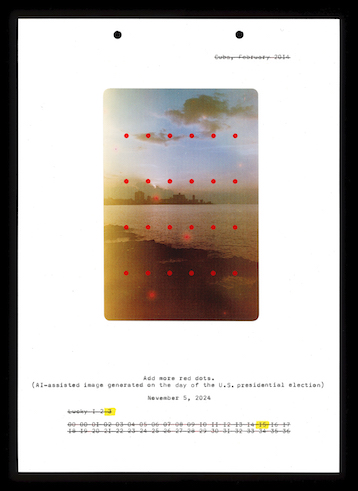
Klara Källström & Thobias Fäldt, from: The Last of the Lucky / You Can’t Always Get What You Want, 2024.
Intro
The Space Between by Klara Källström & Thobias Fäldt questions the role of the image in addressing the fractures of late capitalist democracies and the systems of knowledge they are based on. By investigating the interstitial, the in-between, and the minor, and by suggesting unexpected connections between historical facts and present contingencies, the artist duo’s practice challenges ideas of an event and its representation, pointing toward relationality as a way of knowing otherwise. For this show, Källström & Fäldt bring works from their archive into dialogue, adding reflection on AI-generated imagery as a new layer of complexity. The notion of relationality is further explored in connection with the ontological status of AI images—emerging from the assemblage of diverse inputs and embodying multiple desires—and is examined through experiments with generative models. Disclosing potential unfoldings entangled with uncertain futures, images here are not thought of as carriers of fixed properties but as spaces contested between propensities and possibilities.
Klara Källström & Thobias Fäldt, born in 1984 and 1978, live and work in Gothenburg (SE). Their collaboration began in 2005. Among their most recent exhibitions are Documents at Fotografisk Center, Copenhagen (DK, 2025); Annotation Fever! at the Gothenburg International Biennial for Contemporary Art Extended (2025); Victory over the Victory at Havremagasinet, Boden (SE, 2025); Images in Relation: Practices of Post-Representational Aesthetics at MLZ Art Dep, Trieste (IT, 2024); and Klara Källström & Thobias Fäldt at the Hasselblad Foundation, Gothenburg (2023). Since 2008, they have published 23 books, including Källström–Fäldt, released by B-B-B-Books / Walther König (2023). Their publications can be found in museum collections such as the Victoria and Albert Museum, London (GB), Tate, London, Centre Pompidou, Paris (FR), Maison Européenne de la Photographie, Paris, LACMA – Los Angeles County Museum of Art (US), and MACBA, Barcelona (ES).
Read more →Klara Källström & Thobias Fäldt
The Space Between
“We are meaning.” With these words, Jean-Luc Nancy opens the initial chapter of Being Singular Plural, a book claiming the with as the foundation of existence. “[W]e are meaning,” he writes, “in the sense that we are the element in which significations can be produced and circulate.”¹ In the preface, Nancy specifies the moment in which he is writing, the summer of 1995, and names a long and incomplete list of theaters of bloody conflicts all over the world. His pressing question is: “Can we think an earth and a human such that they would be only what they are—nothing but earth and human—and . . . none of the ‘perspectives’ or ‘views’ in view of which we have disfigured humans [les hommes] and driven them to despair?”²
From today’s position—that of witnesses of events afflicting the world, such as the genocide of the Palestinians in Gaza, various wars and ecological catastrophes, a renewed rise of authoritarianism, and unprecedented technological acceleration—we feel the unbearable urgency of this question, and cannot help but remember, with Nancy, that “everything passes between us,” the “we” he refers to being composed of “all things, all beings, all entities, everything past and future, alive, dead, inanimate, stones, plants, nails, gods—and ‘humans.’”³
Presenting an extensive selection of works realized by Klara Källström and Thobias Fäldt from 2011 to the present, The Space Between proposes the exhibition as a site for a collective and relational creation of meaning, a space where knowledge emerges in between. The duo’s practice, rooted in collaboration, has always been committed to investigating images’ participation in sense-making processes to undermine the seemingly inescapable “views” and “perspectives,” or, in their words, “the dominant narratives” that disfigure the world as we know it. Palestine is one among many terrains of an investigation that—by relating historical facts and present contingencies, interstitial and macro scales, the seen and the not revealed—creates a space to question the very foundation of Western systems of knowledge.
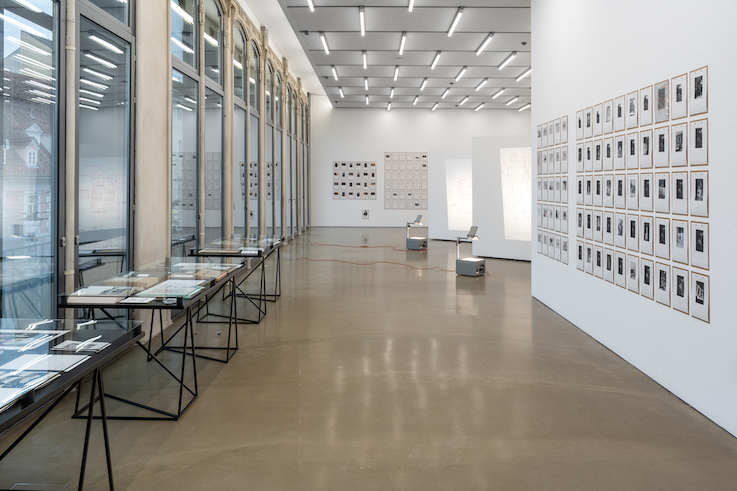
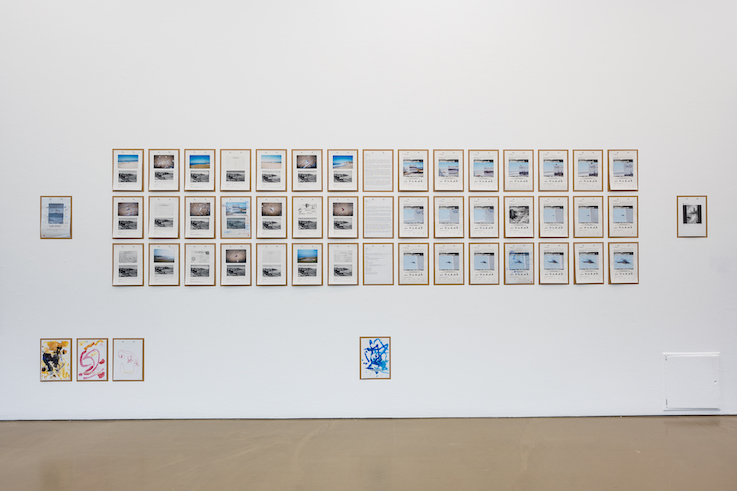
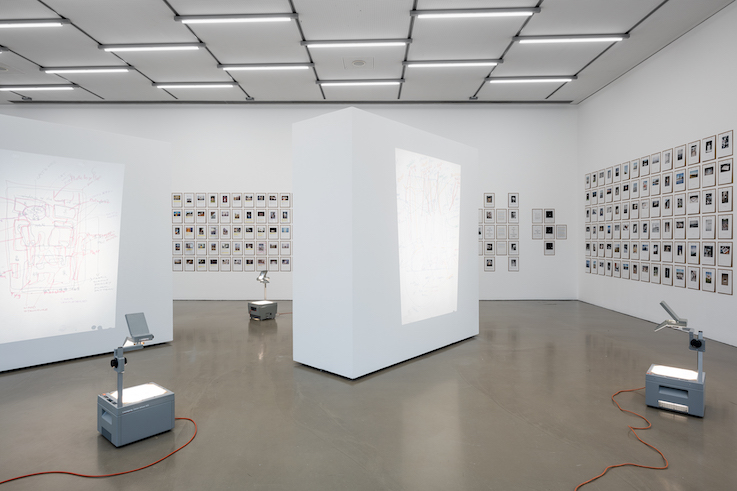
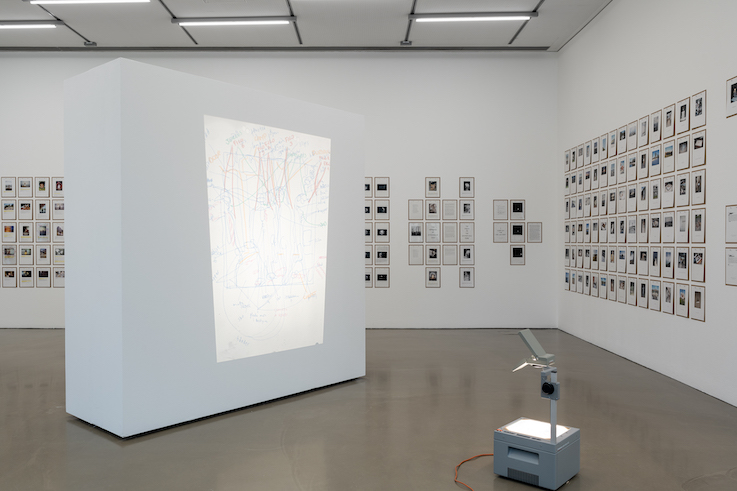
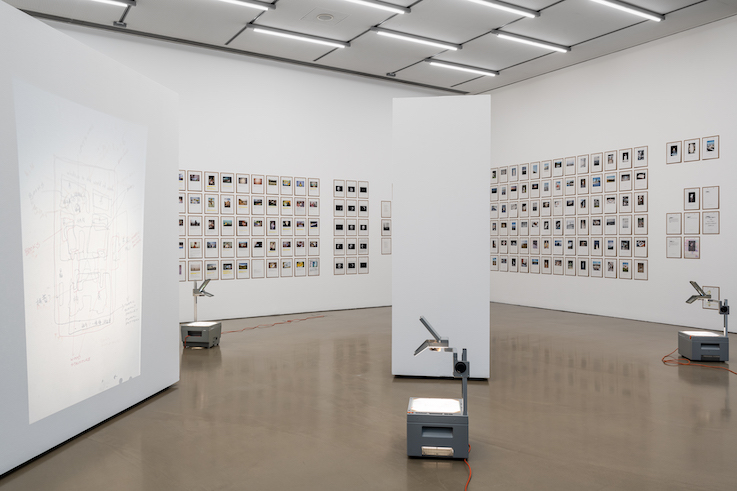
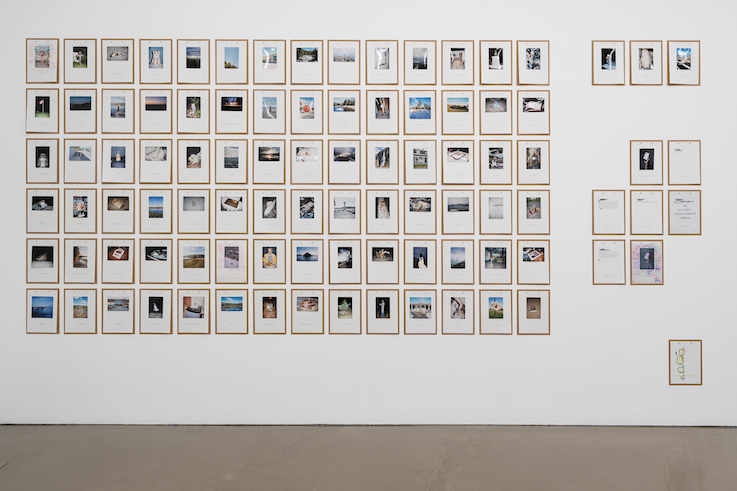
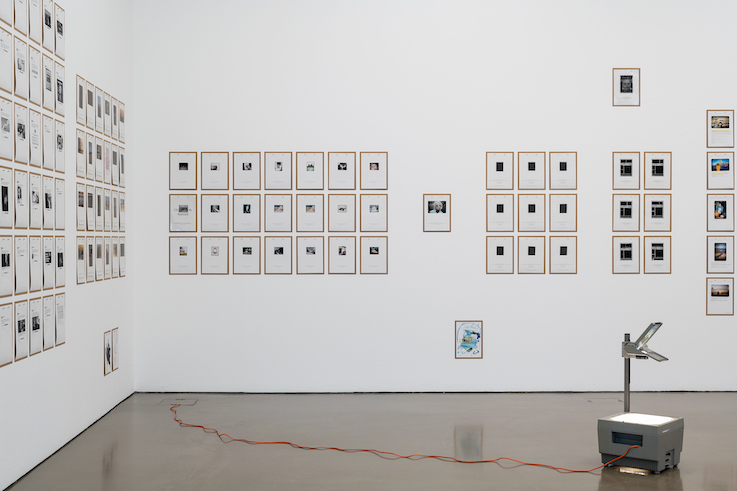
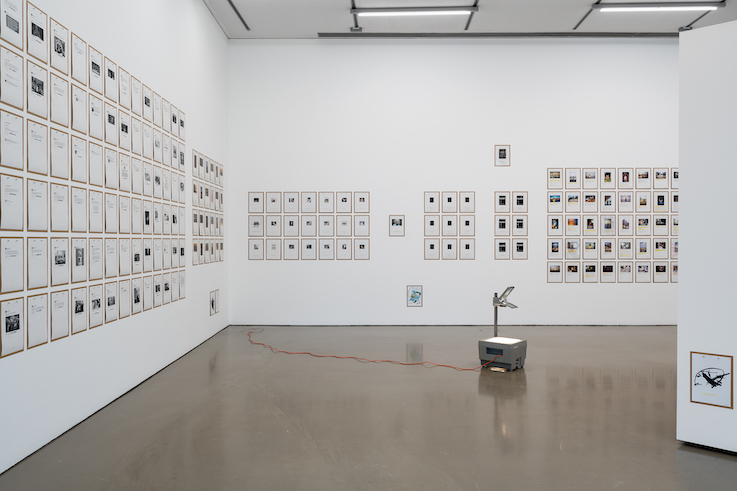
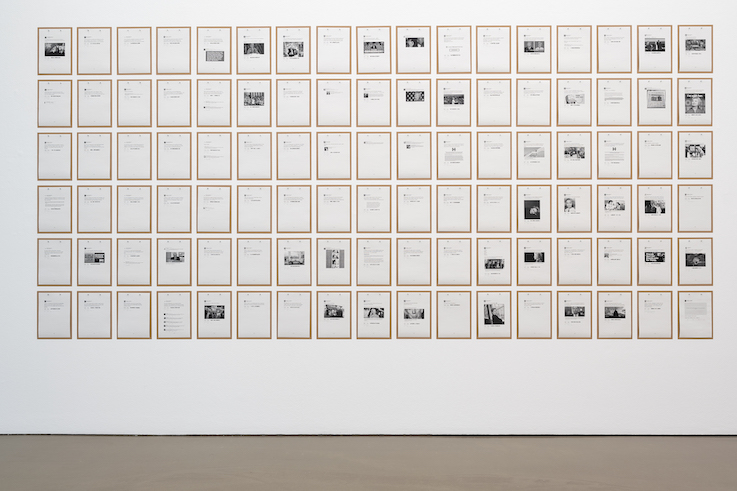
Through an anti-spectacular and post-representational approach, Källström and Fäldt present their work as it is stored in their archive. No photographic enlargements, no bespoke frames; just A4 paper sheets usually containing a 10 × 15 cm print and a textual component. The latter may assume the form of archival numbers, geographical and temporal data about the photograph, or references to seemingly unrelated events. Mainly constituted by photos shot by the artists, the images alternatively take the shape of Twitter screenshots, historical postcards, found photographs, reproductions of newspaper covers, children’s drawings, and annotation sketches. No image is intended as a self-explanatory representation of a truth; rather, it is in the space created by the encounter between elements from these expanded realms—the visual and the textual—that the sense of each work emerges. Across twenty-one series, Källström and Fäldt unfold the potential of relational multiplicity, according to the conditions, companionships, and events that each work is entangled with.
Stemming from a collaboration with the collector Thomas Sauvin, On This Day (2018–21) combines prints from his Beijing Silvermine archive—comprising hundreds of thousands of negatives saved from a recycling plant in China—with entries from the US website onthisday.com, the world’s largest database of day-by-day historical events and meaningful facts. By pairing vernacular photographs with textual accounts of globally renowned events, using the specific dates on which the images were taken as a connecting factor, the work asks: What happens when such disparate systems as the Chinese and Western ones are brought together? How might one reread the other? Where might common ground lay?
Who Is Salt? (2015), initiated by the duo’s long-term friend and collaborator Johannes Wahlström, is built around photographs of the Internet Movie Database (IMDb) opened on the artists’ phone screen and screenshots of emails leaked by the Sony Pictures hack in 2014. The texts reveal the pressure exerted on Angelina Jolie to accept the role of CIA agent Evelyn Salt in the movie Salt (2010), in return for which she would be offered the part of Cleopatra, a role she had long desired. The IMDb pictures confirm her supposed participation in both projects, documented by the artists before the listings disappeared. The assembly of the work prompts reflection on the military-entertainment complex,4 here viewed as a cooperation between the two industries aimed at weaving narratives to influence public opinion in favor of US politics.
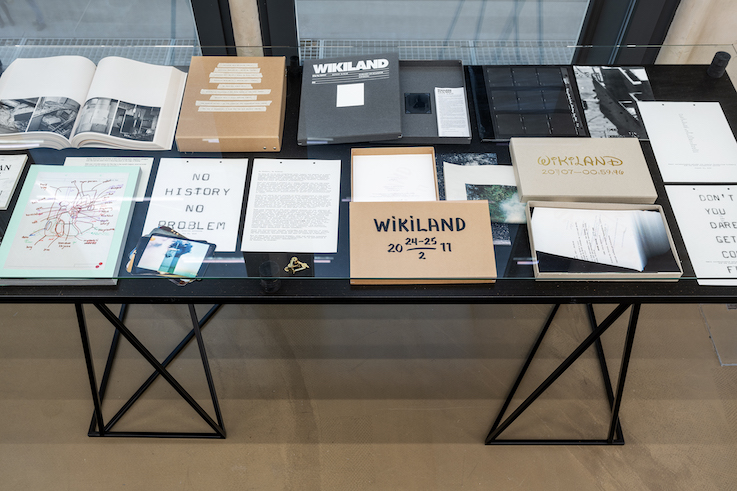
This complicity is also explored in the second chapter of the Wikiland project, which follows the story of Julian Assange, the activist who, in 2010, published confidential US files on the WikiLeaks platform. Wikiland 2007-07-12-00:59:46 (2014) connects the killing of twelve people, including civilians and Reuters photographers, by a US military Apache helicopter in Baghdad on July 12, 2007, with the image of Assange interpreted by the actor Benedict Cumberbatch in the 2013 movie The Fifth Estate (2013). Between these two events is the video Collateral Murder, showing classified military footage of the attack leaked by Chelsea Manning and made public by WikiLeaks in 2010, later shown, in the film distributed by Disney, to desensitize the public about this shocking war crime.
The first and third chapters of Wikiland question the mainstream image of Assange by altering the relationship between media rules of engagement and the photographers’ intentionality, letting the story’s meaning emerge between what we are supposed to see and the refusal to indulge dominant views. In 2011, when Assange was under house arrest in Norfolk, UK, awaiting a possible extradition to Sweden, Källström and Fäldt were among the few photographers allowed to visit him. While international media outlets anticipated footage from the house, the duo decided not to point the camera toward the man, but instead to depict interstitial aspects of everyday life: objects, clothes, leftovers, and details of the residence—images rendered entirely useless, by media standards.
As Judith Butler observes: “The refusal to narrate remains a relation to narrative and to the scene of address. As a narrative withheld, it either refuses the relation that the inquirer presupposes or changes that relation so that the one queried refuses the one who queries.”5 A similar refusal is also enacted in Wikiland, 23 June, 2017 / Sunny 16 Rule (2017). At that time, Assange was sheltered in the Ecuadorian Embassy in London. Källström and Fäldt went to portray him on Midsummer’s Eve, Sweden’s longest and brightest day of the year, using the Sunny 16 rule, a method for estimating exposure without a light meter. The result is a series of entirely black frames, except for the final photograph: taken with a flash, it offers an equally anti-mediatic silhouette of the activist.
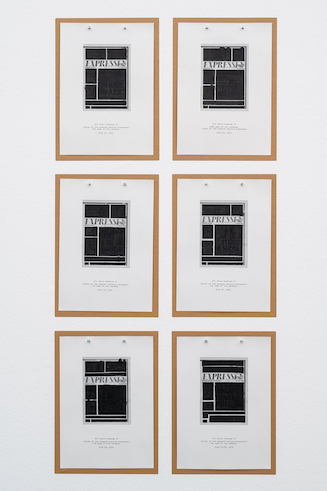
The Space Between presents, for the first time, the final part of the Wikiland project. Here, the images are front pages from the Swedish newspaper Expressen, collected by the duo during the last week of June 2024, when Assange’s long legal ordeal ended. Expressen was the first to report the alleged rape charges against Assange, triggering a media spectacle that, despite a full acquittal in 2019, continued with Espionage Act charges. While Assange’s portrait stands out next to a bold headline on the August 21, 2010, cover, no mention of him appeared the week after his release from Belmarsh Prison on June 24, 2024, or after his court appearance on the US-administered Saipan, Northern Mariana Islands, a day later—events concluding what many consider one of the most sensational attacks on press freedom and a key case of human rights violations.
Also featured for the first time is the series A Synchronoptic View (2020–25), which combines drawings made by Ask and Odd, the artists’ children, in their early years with texts reporting the most prominent news reaching their parents on the exact dates the drawings were made. The relation between visual and textual components creates a space between the public and private that resonates with Butler’s words: “When the ‘I’ seeks to give an account of itself, it can start with itself, but it will find that this self is already implicated in a social temporality that exceeds its own capacities for narration . . . The ‘I’ is always to some extent dispossessed by the social conditions of its emergence.”6 If the conditions within which subjectivity takes shape are so influenced by disfiguring views, what might the horizon of the future look like?
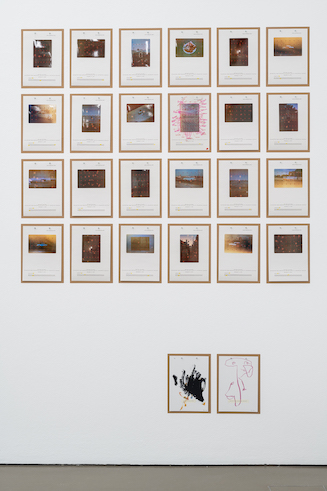
This question lies at the base of Iconologies of AI, an ongoing project started in 2025 and carried out with the media theorist Bernard Dionysius Geoghegan, with the intention of exploring the limits of visual historiography in light of generative AI. An unsettling result of this research appears in the AI’s rereading of The Last of the Lucky / You Can’t Always Get What You Want (2014–16). Initially, the series assembled twenty-four photographs shot in Cuba with “the last rolls available on the island,” as the artists were told by the seller—a hypothesis supported by the red dots caused by mold on the negatives—and 100 screenshots from Twitter collected by Johannes Wahlström, mentioned above. The tweets convey the atmosphere of the 2016 US presidential race, involving Hillary Clinton, Bernie Sanders, and the then-elected Donald Trump, and refer to Barack Obama’s 2016 visit to Cuba, a Rolling Stones concert in Havana, as well as plans for a “Cuban Spring” in the 1990s, all aimed at Westernizing the country. The idea of revisiting the work through AI echoed Walter Benjamin’s reflection on how human perception changes over historical periods due to the media that shape them, and how media are conditioned not only by nature but by history. On the day of Trump’s reelection in 2024, Källström and Fäldt uploaded the twenty-four photographs to DALL-E. In asking how the work would look today, they directed attention to the mold’s traces. The result is a visual manifestation of both contingency and statistical approximation, with random stains turned, by the AI, into an ordered grid of twenty-four red dots overlaying each photograph.
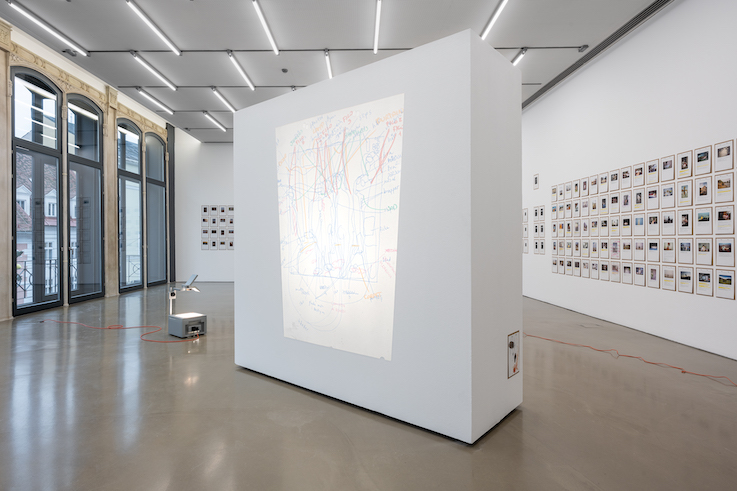
What margins of maneuverability are left to “us”? With this question in mind, Källström and Fäldt set out to create a generative AI model starting from their own archive, alongside that of Thomas Sauvin. They initially focused on annotation, a process at the core of dataset construction. Typically carried out by underpaid gig workers accomplishing their task with no idea of the goal, under conditions of time pressure, and in isolation, annotation is here reimagined by the artists as a collective practice. Sketches of annotated images punctuate the archive, presented in the exhibition space as a continuous string of data. These non-images were realized during workshops titled Annotation Fever!, one of which will also involve the audience at Camera Austria. The title refers to Jacques Derrida’s “archive fever,” meant as the compulsion to turn any memory into an archivable item, with the risk of excluding not only what is deemed unworthy of memory by those in power to archive, but also what exceeds the very archival process. The workshops, in fact, revealed that, far from being an infallible protocol, annotation is an impossible task, just like reducing an image to a definitive truth. Annotating is the new means through which reality is mediated, and it raises as many questions as archiving does: Who has the right to annotate, under what conditions, for whom? Who dictates what will be written in history and how the world will look? As Derrida warned us, “the question of the archive is not a question of the past. . . . It is a question of the future, . . . and of a responsibility for tomorrow.”7
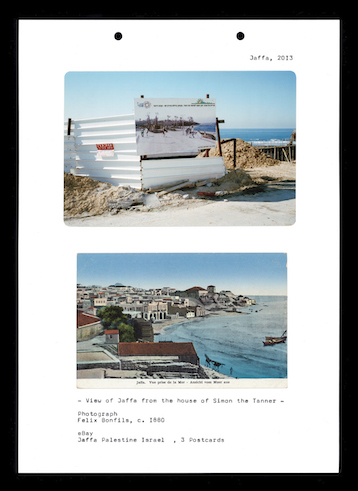
How Gaza will look has been violently asserted by Donald Trump through an AI-generated video released on Instagram in February 2025. A frame from it closes the series that Källström and Fäldt dedicate to Palestine. In the first part, A Beach (2013–16), postcards showing Jaffa’s beach photographed by Félix Bonfils in 1880 dialogue with the duo’s 2013 images of the same beach, and childhood memories of Wahlström. In the artists’ photographs, only scattered tile fragments remain from the buildings in Bonfils’s images; the rest has been erased by “a process of gentrification through which Jaffa was transformed into Tel Aviv and Palestine into Israel.”8 Ten years later, Källström, Fäldt, and Wahlström revisited the project. In December 2023, a few months after the Hamas attack and Israel’s brutal offensive on Gaza, an Israeli real-estate agency published an ad titled: “Gush Katif: the evacuation phase has already started, preparing for the construction phase.” Gaza is where Palestinians who fled from Jaffa during the 1948 Nakba were relocated. In A Beach 2013 Revisited (2023), the images of the ad are juxtaposed with increasing close-ups of an Apache helicopter standing in the background of a 2013 image that depicts the Jaffa seafront projects. The military aircraft image multiplies in the work as a nefarious prelude to the horror to come.
Can earth and humans ever be nothing but what they are? The Space Between is an invitation to undo the dominant narratives in view of which humans are disfigured and driven to despair, by opening a space where the gaze diverts from inherited ways of seeing, and reality co-constitutes itself through looking with and between.
¹ Jean-Luc Nancy, Being Singular Plural (Stanford: Stanford University Press, 2000), p. 2.
² Ibid., p. XII.
³ Ibid., p. 3.
4 On the notion of the “military-entertainment complex,” see Tim Lenoir, “All but War Is Simulation: The Military-Entertainment Complex,” Configurations 8, no. 3 (Fall 2000); Tim Lenoir and Luke Caldwell, The Military-Entertainment Complex (Cambridge, MA: Harvard University Press, 2018).
5 Judith Butler, Giving an Account on Oneself (New York: Fordham University Press, 2005), p. 12.
6 Ibid., p. 8.
7 Jacques Derrida, Archive Fever: A Freudian Impression (Chicago and London: University of Chicago Press, 1996), p. 36.
8 Klara Källström and Thobias Fäldt, Källström-Fäldt (Gothenburg: B-B-B-Books; Cologne: Verlag der Buchhandlung Walther und Franz König, 2023).
Francesca Lazzarini
Klara Källström & Thobias Fäldt, born in 1984 and 1978, live and work in Gothenburg (SE). Their collaboration began in 2005. Among their most recent exhibitions are Documents at Fotografisk Center, Copenhagen (DK, 2025); Annotation Fever! at the Gothenburg International Biennial for Contemporary Art Extended (2025); Victory over the Victory at Havremagasinet, Boden (SE, 2025); Images in Relation: Practices of Post-Representational Aesthetics at MLZ Art Dep, Trieste (IT, 2024); and Klara Källström & Thobias Fäldt at the Hasselblad Foundation, Gothenburg (2023). Since 2008, they have published 23 books, including Källström–Fäldt, released by B-B-B-Books / Walther König (2023). Their publications can be found in museum collections such as the Victoria and Albert Museum, London (GB), Tate, London, Centre Pompidou, Paris (FR), Maison Européenne de la Photographie, Paris, LACMA – Los Angeles County Museum of Art (US), and MACBA, Barcelona (ES).
Francesca Lazzarini is a curator of the visual arts. Her PhD research in Advanced Practices at Goldsmiths, London (GB), looks at the post-photographic as a dynamic space to rethink ways of togetherness with and through images. After working for Fondazione Fotografia Modena (IT, 2007–13), she undertook an independent path, privileging research and collaboration-based projects, which were hosted, in different forms, by Centre de la photographie Genève, Geneva (CH), SixtyEight, Copenhagen (DK), Fondazione Modena Arti Visive (FMAV), Modena, Kunsthaus, Graz (AT), Škuc Gallery, Ljubljana (SI), Istituto Centrale per il Catalogo e la Documentazione (ICCD), Rome (IT), BACO, Bergamo (IT), Trieste Contemporanea, and MLZ Art Dep, Trieste. She is a coinitiator of the research network POIUYT (2016–ongoing), part of the Absent Audience collective (2020–ongoing), and director of AiR Trieste (2016–ongoing).
Installation Views
-
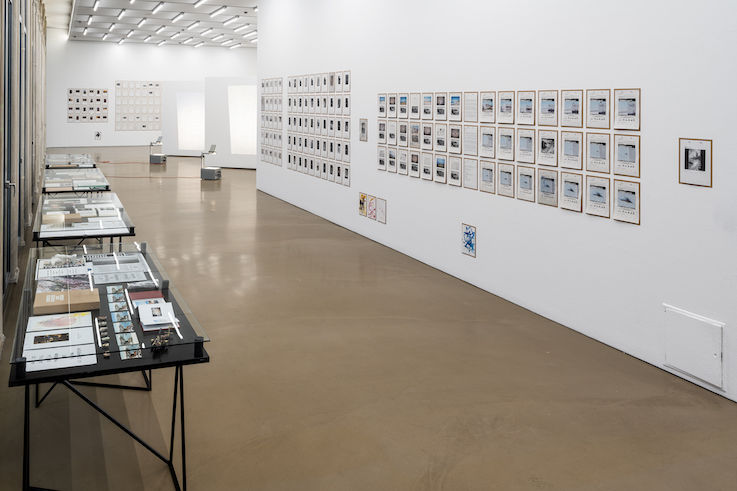
Klara Källström & Thobias Fäldt: The Space Between
Camera Austria 2025
Photo: Markus Krottendorfer -
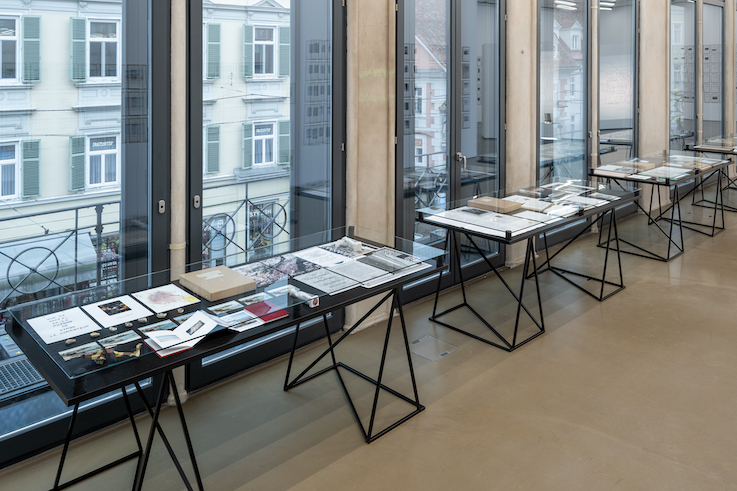
Klara Källström & Thobias Fäldt: The Space Between
Camera Austria 2025
Photo: Markus Krottendorfer -

Klara Källström & Thobias Fäldt: The Space Between
Camera Austria 2025
Photo: Markus Krottendorfer -
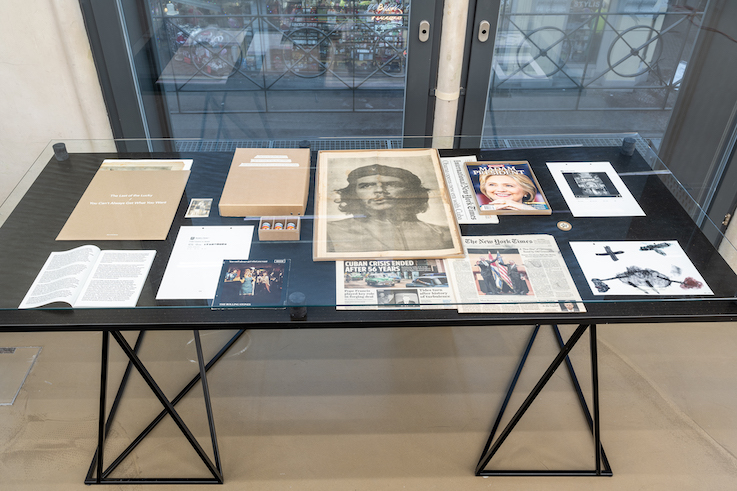
Klara Källström & Thobias Fäldt: The Space Between
Camera Austria 2025
Photo: Markus Krottendorfer -
Klara Källström & Thobias Fäldt: The Space Between
Camera Austria 2025
Photo: Markus Krottendorfer -
Klara Källström & Thobias Fäldt: The Space Between
Camera Austria 2025
Photo: Markus Krottendorfer -
Klara Källström & Thobias Fäldt: The Space Between
Camera Austria 2025
Photo: Markus Krottendorfer -
Klara Källström & Thobias Fäldt, from: A Beach, 2013–16.
-
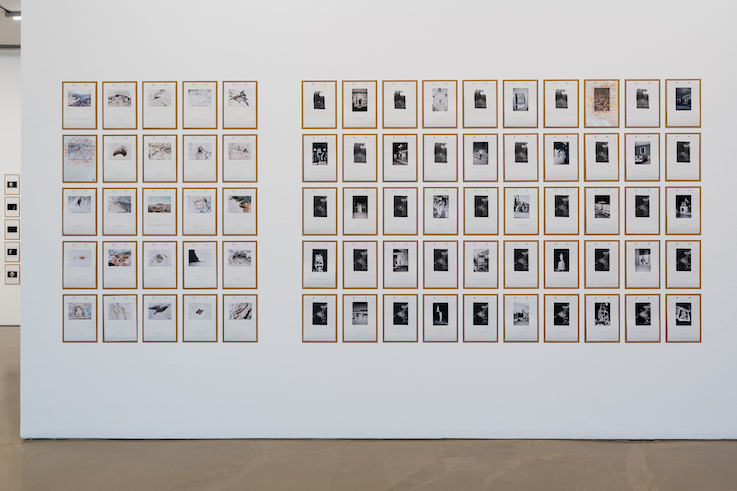
Klara Källström & Thobias Fäldt: The Space Between
Camera Austria 2025
Photo: Markus Krottendorfer -
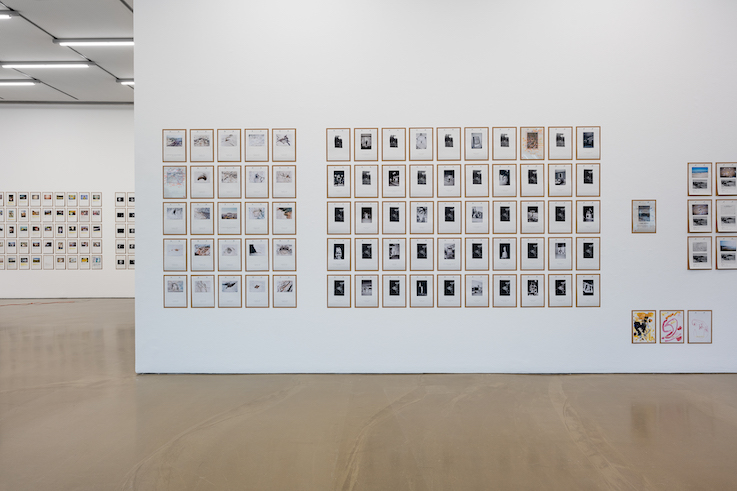
Klara Källström & Thobias Fäldt: The Space Between
Camera Austria 2025
Photo: Markus Krottendorfer -
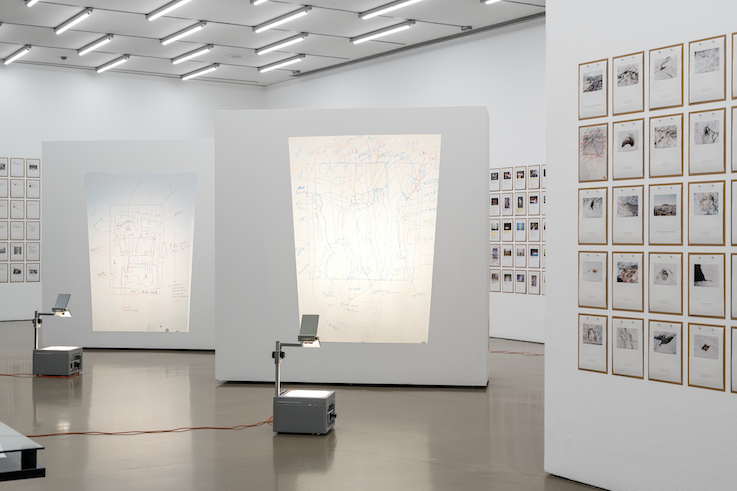
Klara Källström & Thobias Fäldt: The Space Between
Camera Austria 2025
Photo: Markus Krottendorfer -
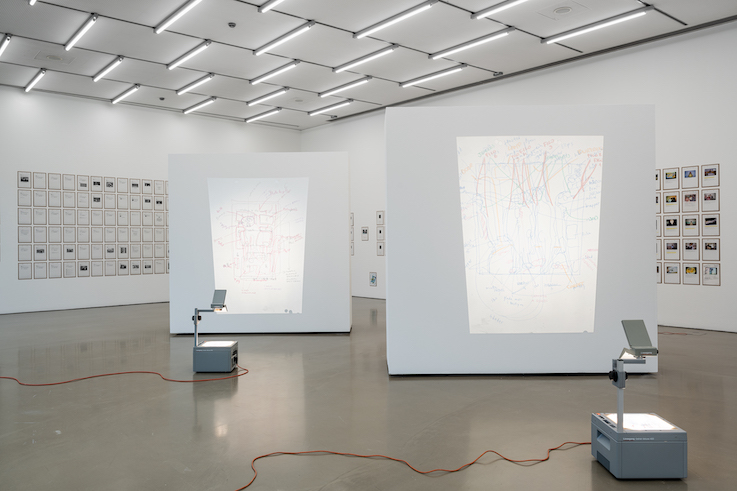
Klara Källström & Thobias Fäldt: The Space Between
Camera Austria 2025
Photo: Markus Krottendorfer -
Klara Källström & Thobias Fäldt: The Space Between
Camera Austria 2025
Photo: Markus Krottendorfer -
Klara Källström & Thobias Fäldt: The Space Between
Camera Austria 2025
Photo: Markus Krottendorfer -
Klara Källström & Thobias Fäldt: The Space Between
Camera Austria 2025
Photo: Markus Krottendorfer -

Klara Källström & Thobias Fäldt, from: Who Is Salt?, 2015.
-
Klara Källström & Thobias Fäldt: The Space Between
Camera Austria 2025
Photo: Markus Krottendorfer -

Klara Källström & Thobias Fäldt: The Space Between
Camera Austria 2025
Photo: Markus Krottendorfer -
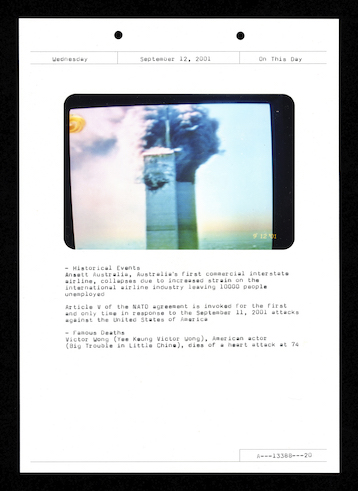
Klara Källström & Thobias Fäldt with Thomas Sauvin, from: On This Day, 2018–21.
-
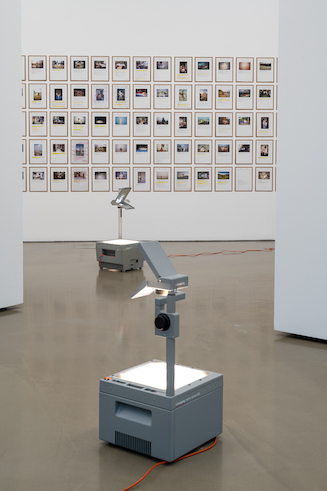
Klara Källström & Thobias Fäldt: The Space Between
Camera Austria 2025
Photo: Markus Krottendorfer -

Klara Källström & Thobias Fäldt: The Space Between
Camera Austria 2025
Photo: Markus Krottendorfer -
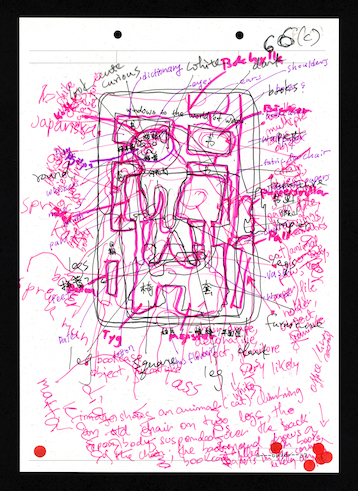
Klara Källström & Thobias Fäldt with Thomas Sauvin and Bernard Dionysius Geoghegan, from: Annotation Fever!, 2025.
-
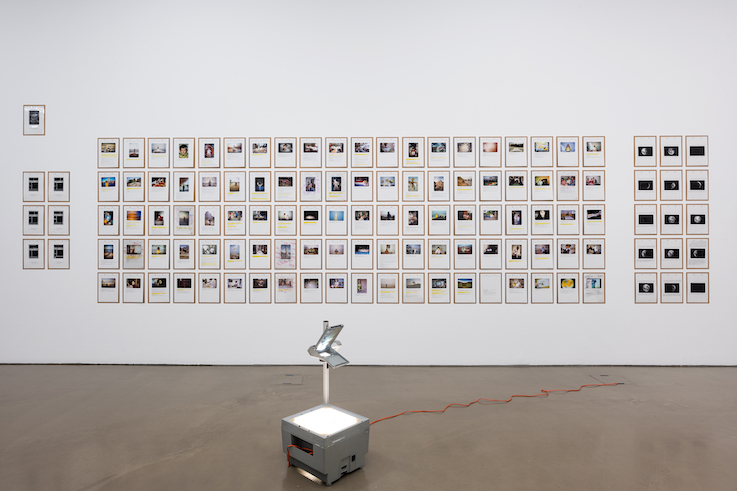
Klara Källström & Thobias Fäldt: The Space Between
Camera Austria 2025
Photo: Markus Krottendorfer -
Klara Källström & Thobias Fäldt: The Space Between
Camera Austria 2025
Photo: Markus Krottendorfer -
Klara Källström & Thobias Fäldt: The Space Between
Camera Austria 2025
Photo: Markus Krottendorfer -
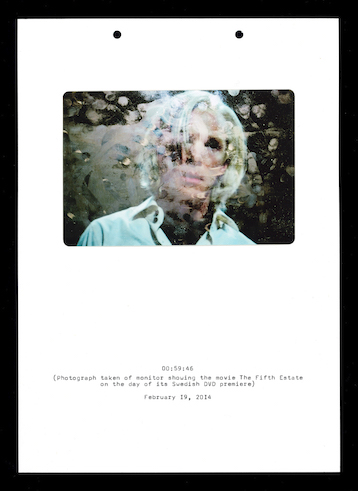
Klara Källström & Thobias Fäldt, from: Wikiland 00.59.46, 2014.
-
Klara Källström & Thobias Fäldt: The Space Between
Camera Austria 2025
Photo: Markus Krottendorfer -
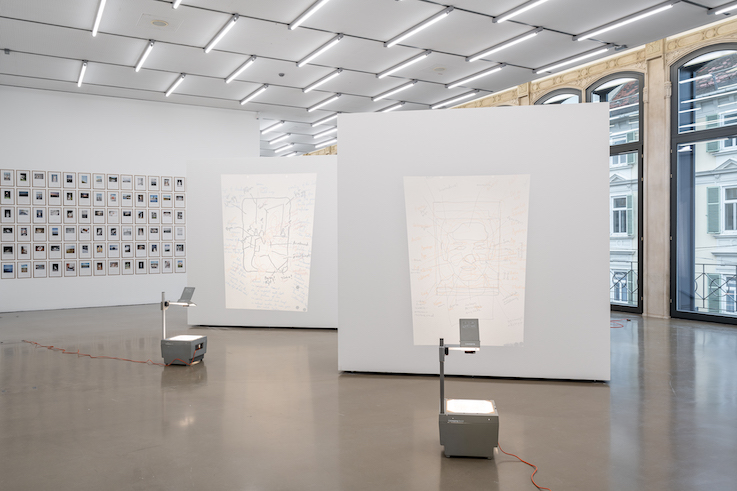
Klara Källström & Thobias Fäldt: The Space Between
Camera Austria 2025
Photo: Markus Krottendorfer -
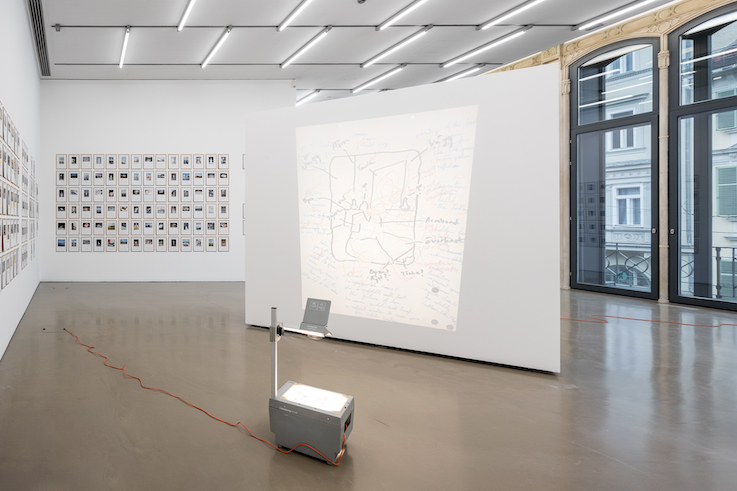
Klara Källström & Thobias Fäldt: The Space Between
Camera Austria 2025
Photo: Markus Krottendorfer -
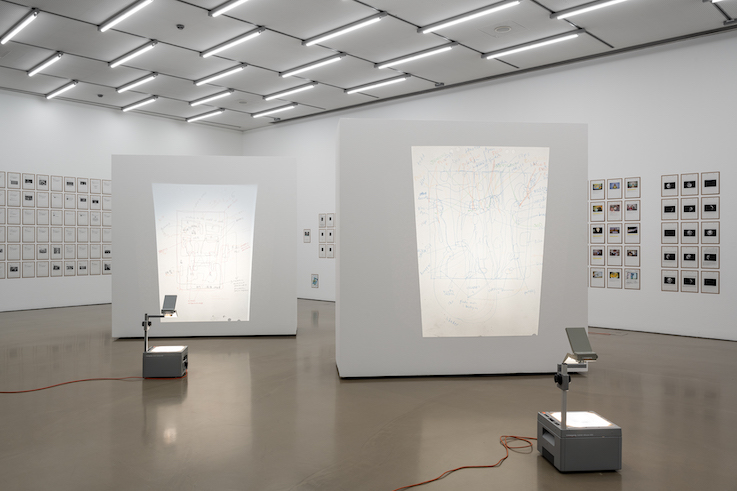
Klara Källström & Thobias Fäldt: The Space Between
Camera Austria 2025
Photo: Markus Krottendorfer -
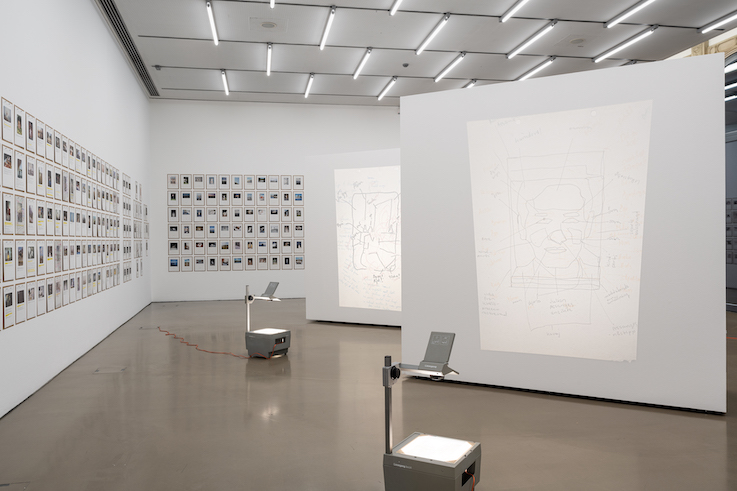
Klara Källström & Thobias Fäldt: The Space Between
Camera Austria 2025
Photo: Markus Krottendorfer -

Klara Källström & Thobias Fäldt: The Space Between
Camera Austria 2025
Photo: Markus Krottendorfer -
Klara Källström & Thobias Fäldt: The Space Between
Camera Austria 2025
Photo: Markus Krottendorfer -
Klara Källström & Thobias Fäldt, from: The Last of the Lucky / You Can’t Always Get What You Want, 2024.
-
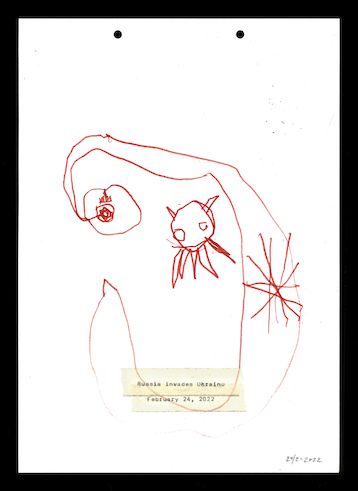
Klara Källström & Thobias Fäldt with Ask & Odd, from: A Synchronoptic View, 2020–25.
-
Klara Källström & Thobias Fäldt: The Space Between
Camera Austria 2025
Photo: Markus Krottendorfer -
Klara Källström & Thobias Fäldt: The Space Between
Camera Austria 2025
Photo: Markus Krottendorfer -

Klara Källström & Thobias Fäldt: The Space Between
Camera Austria 2025
Photo: Markus Krottendorfer -
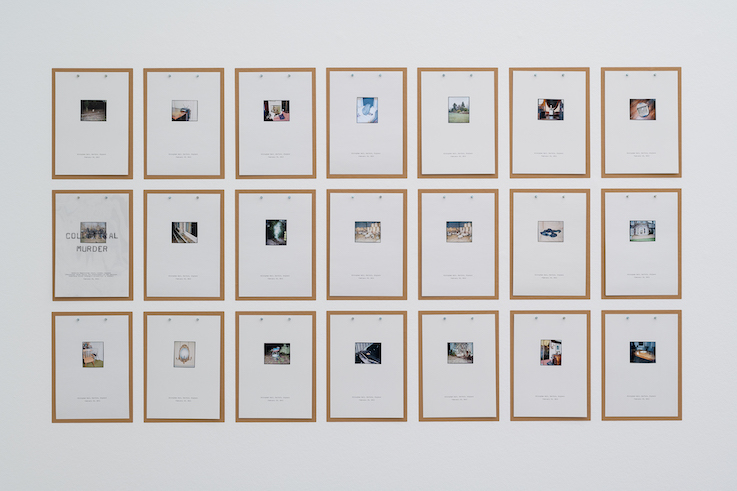
Klara Källström & Thobias Fäldt: The Space Between
Camera Austria 2025
Photo: Markus Krottendorfer -

Klara Källström & Thobias Fäldt: The Space Between
Camera Austria 2025
Photo: Markus Krottendorfer
Opening
-

Opening
Klara Källström & Thobias Fäldt: The Space Between
Award ceremony
Camera Austria Award for Contemporary Photography by the City of Graz 2025 to
Jakob Ganslmeier & Ana Zibelnik
Photo: Natascha Reiterer -
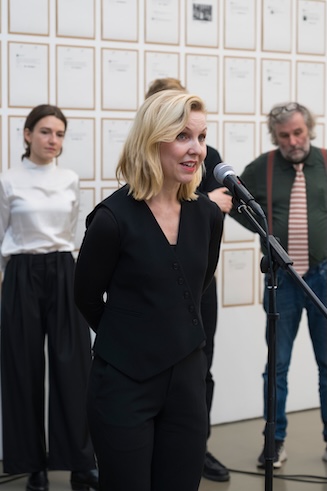
Opening
Klara Källström & Thobias Fäldt: The Space Between
Award ceremony
Camera Austria Award for Contemporary Photography by the City of Graz 2025 to
Jakob Ganslmeier & Ana Zibelnik
Photo: Natascha Reiterer -
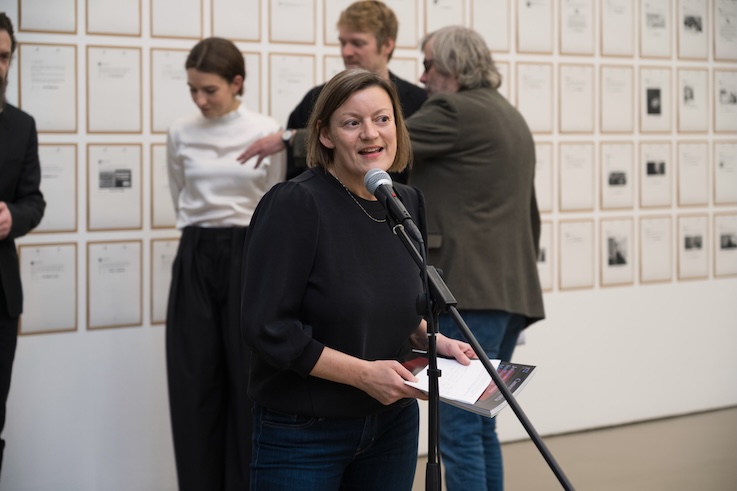
Opening
Klara Källström & Thobias Fäldt: The Space Between
Award ceremony
Camera Austria Award for Contemporary Photography by the City of Graz 2025 to
Jakob Ganslmeier & Ana Zibelnik
Photo: Natascha Reiterer -
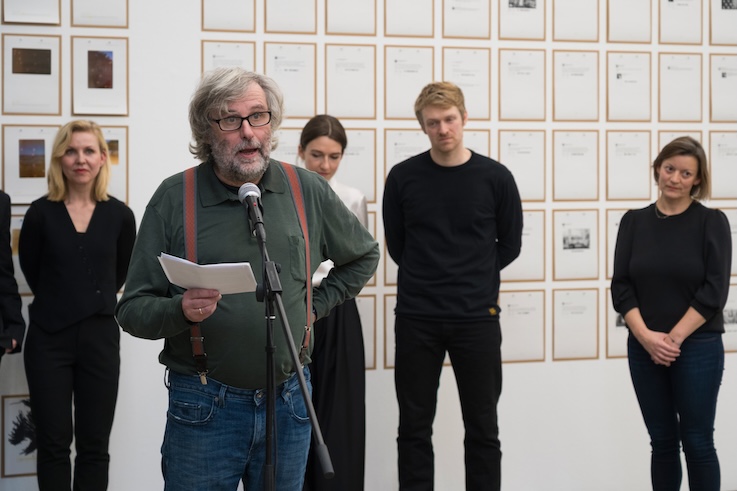
Opening
Klara Källström & Thobias Fäldt: The Space Between
Award ceremony
Camera Austria Award for Contemporary Photography by the City of Graz 2025 to
Jakob Ganslmeier & Ana Zibelnik
Photo: Natascha Reiterer -
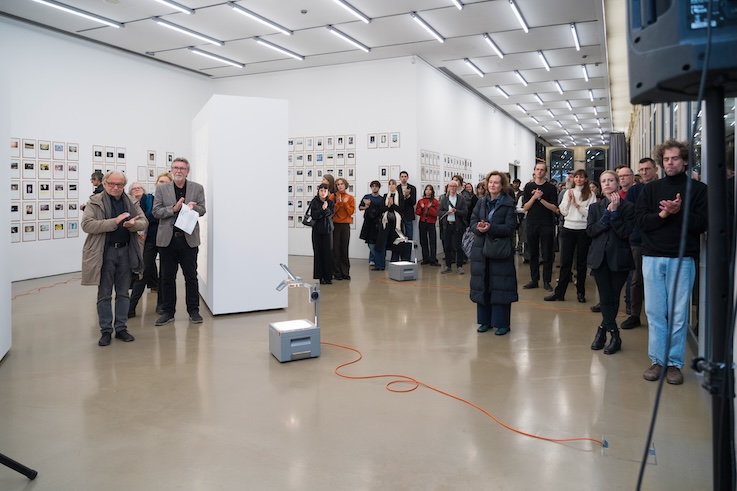
Opening
Klara Källström & Thobias Fäldt: The Space Between
Award ceremony
Camera Austria Award for Contemporary Photography by the City of Graz 2025 to
Jakob Ganslmeier & Ana Zibelnik
Photo: Natascha Reiterer -
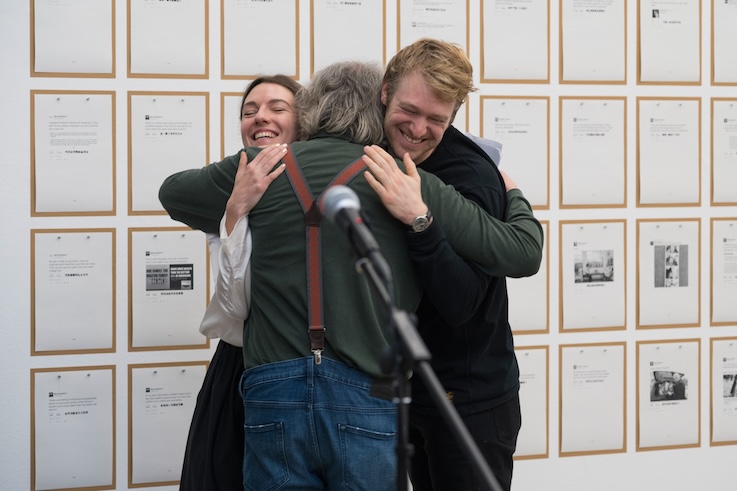
Opening
Klara Källström & Thobias Fäldt: The Space Between
Award ceremony
Camera Austria Award for Contemporary Photography by the City of Graz 2025 to
Jakob Ganslmeier & Ana Zibelnik
Photo: Natascha Reiterer -

Opening
Klara Källström & Thobias Fäldt: The Space Between
Award ceremony
Camera Austria Award for Contemporary Photography by the City of Graz 2025 to
Jakob Ganslmeier & Ana Zibelnik
Photo: Natascha Reiterer -
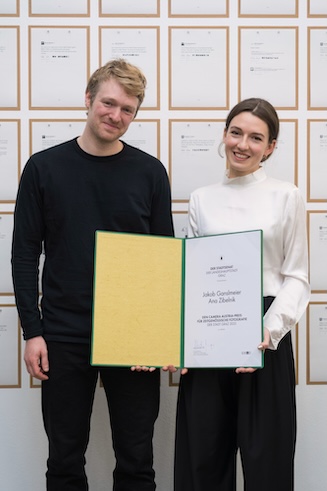
Opening
Klara Källström & Thobias Fäldt: The Space Between
Award ceremony
Camera Austria Award for Contemporary Photography by the City of Graz 2025 to
Jakob Ganslmeier & Ana Zibelnik
Photo: Natascha Reiterer -
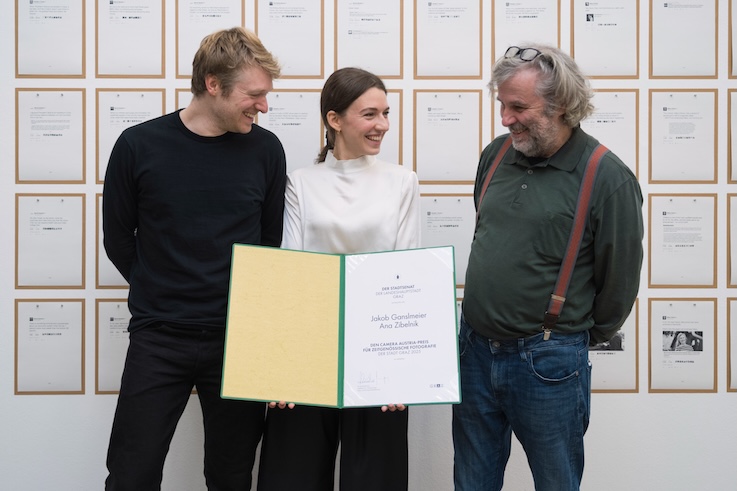
Opening
Klara Källström & Thobias Fäldt: The Space Between
Award ceremony
Camera Austria Award for Contemporary Photography by the City of Graz 2025 to
Jakob Ganslmeier & Ana Zibelnik
Photo: Natascha Reiterer -
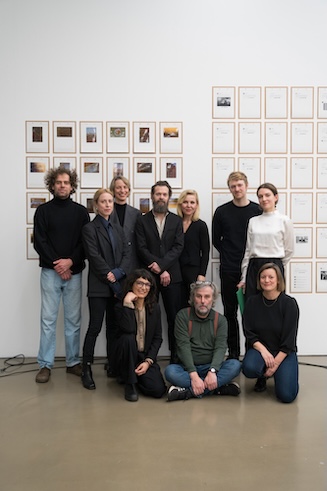
Opening
Klara Källström & Thobias Fäldt: The Space Between
Award ceremony
Camera Austria Award for Contemporary Photography by the City of Graz 2025 to
Jakob Ganslmeier & Ana Zibelnik
Photo: Natascha Reiterer -
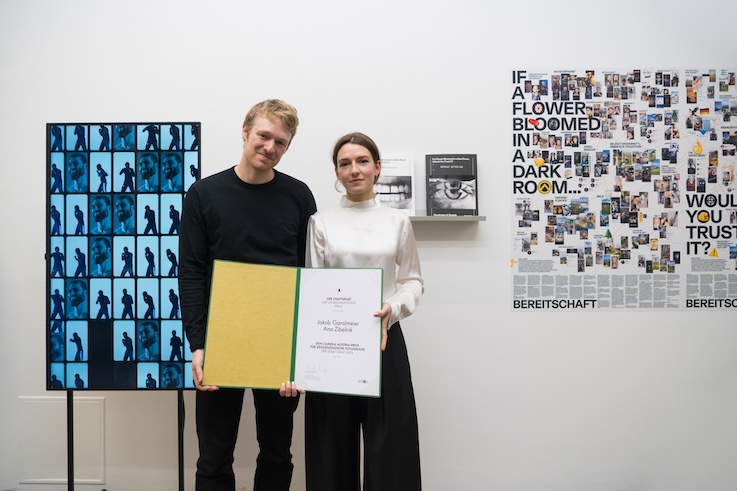
Opening
Klara Källström & Thobias Fäldt: The Space Between
Award ceremony
Camera Austria Award for Contemporary Photography by the City of Graz 2025 to
Jakob Ganslmeier & Ana Zibelnik
Photo: Natascha Reiterer -
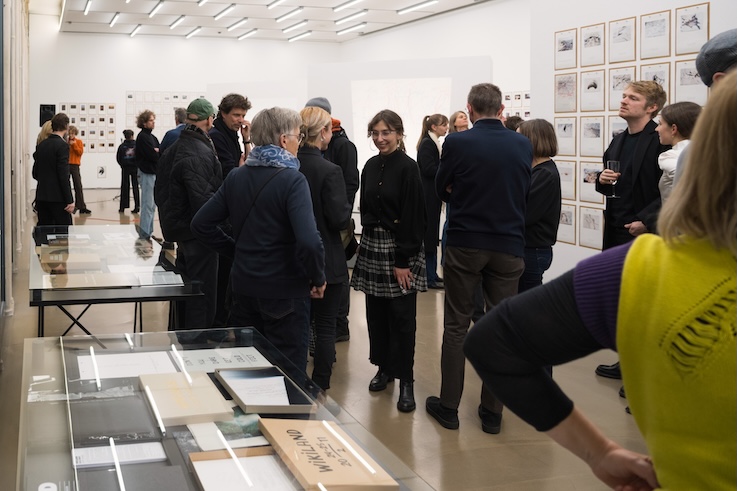
Opening
Klara Källström & Thobias Fäldt: The Space Between
Award ceremony
Camera Austria Award for Contemporary Photography by the City of Graz 2025 to
Jakob Ganslmeier & Ana Zibelnik
Photo: Natascha Reiterer -
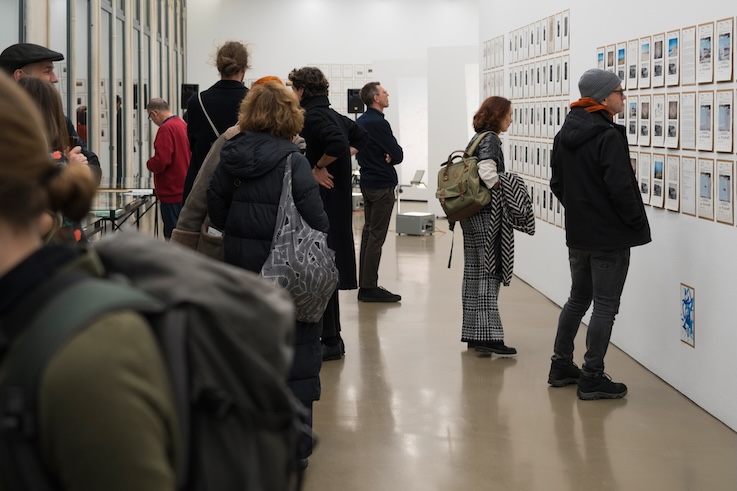
Opening
Klara Källström & Thobias Fäldt: The Space Between
Award ceremony
Camera Austria Award for Contemporary Photography by the City of Graz 2025 to
Jakob Ganslmeier & Ana Zibelnik
Photo: Natascha Reiterer -

Opening
Klara Källström & Thobias Fäldt: The Space Between
Award ceremony
Camera Austria Award for Contemporary Photography by the City of Graz 2025 to
Jakob Ganslmeier & Ana Zibelnik
Photo: Natascha Reiterer -
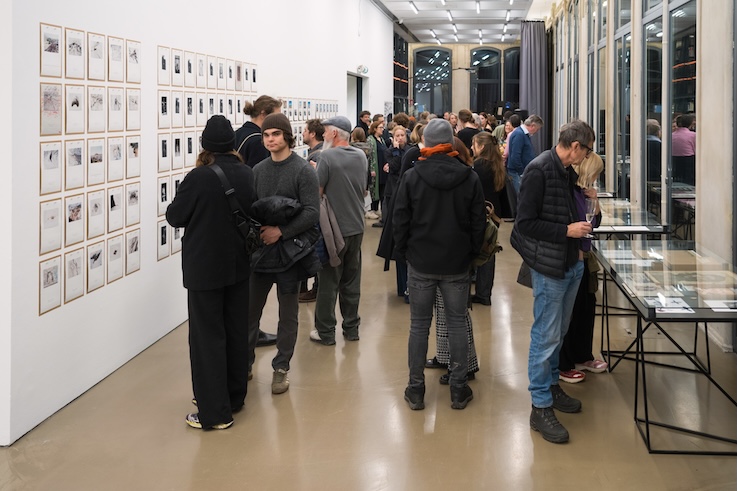
Opening
Klara Källström & Thobias Fäldt: The Space Between
Award ceremony
Camera Austria Award for Contemporary Photography by the City of Graz 2025 to
Jakob Ganslmeier & Ana Zibelnik
Photo: Natascha Reiterer -
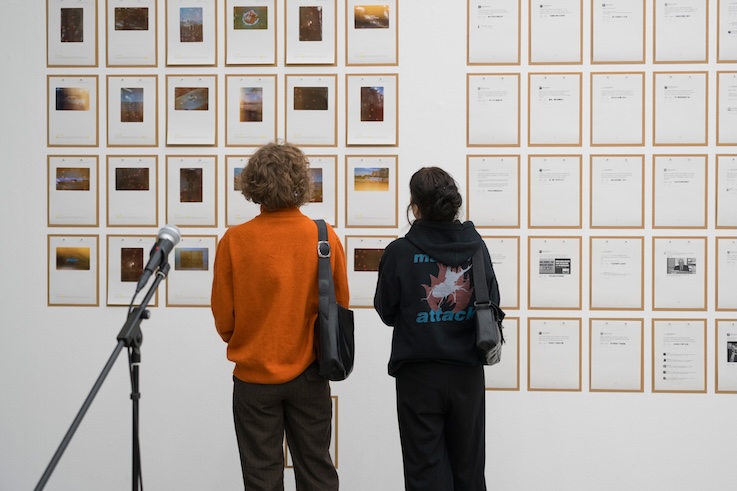
Opening
Klara Källström & Thobias Fäldt: The Space Between
Award ceremony
Camera Austria Award for Contemporary Photography by the City of Graz 2025 to
Jakob Ganslmeier & Ana Zibelnik
Photo: Natascha Reiterer -
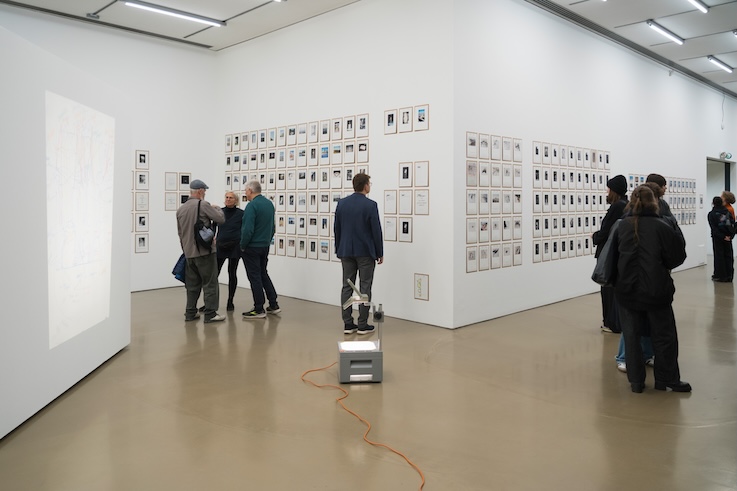
Opening
Klara Källström & Thobias Fäldt: The Space Between
Award ceremony
Camera Austria Award for Contemporary Photography by the City of Graz 2025 to
Jakob Ganslmeier & Ana Zibelnik
Photo: Natascha Reiterer -
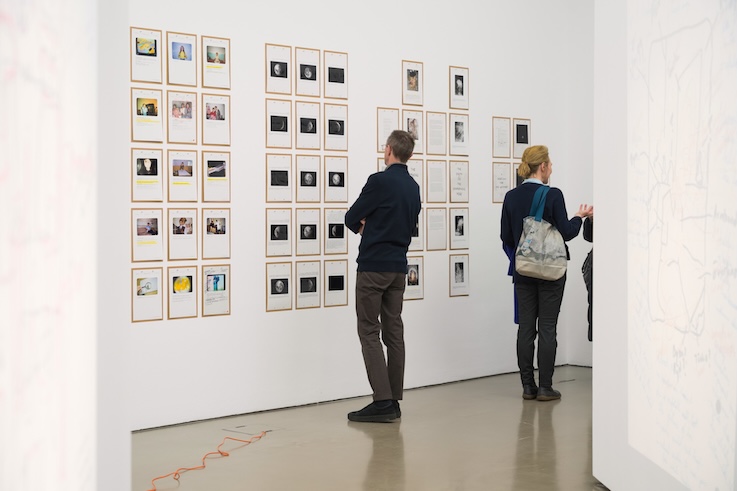
Opening
Klara Källström & Thobias Fäldt: The Space Between
Award ceremony
Camera Austria Award for Contemporary Photography by the City of Graz 2025 to
Jakob Ganslmeier & Ana Zibelnik
Photo: Natascha Reiterer -
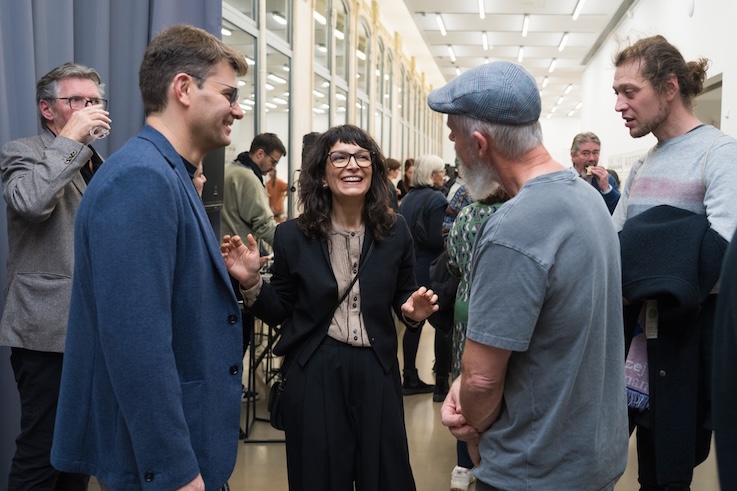
Opening
Klara Källström & Thobias Fäldt: The Space Between
Award ceremony
Camera Austria Award for Contemporary Photography by the City of Graz 2025 to
Jakob Ganslmeier & Ana Zibelnik
Photo: Natascha Reiterer -
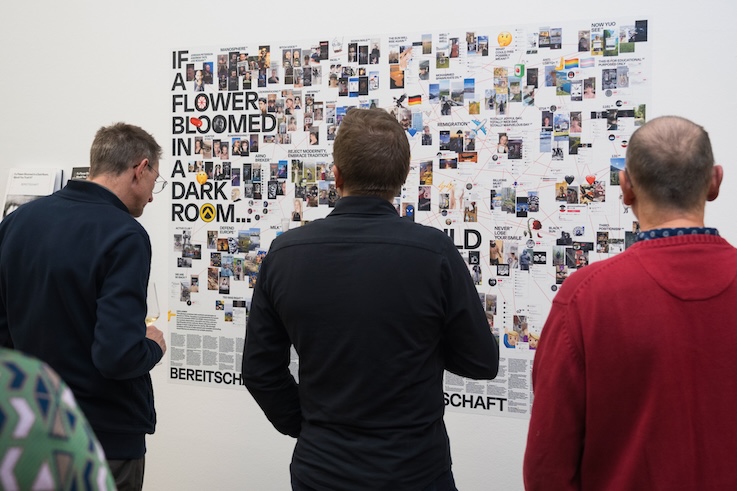
Opening
Klara Källström & Thobias Fäldt: The Space Between
Award ceremony
Camera Austria Award for Contemporary Photography by the City of Graz 2025 to
Jakob Ganslmeier & Ana Zibelnik
Photo: Natascha Reiterer -
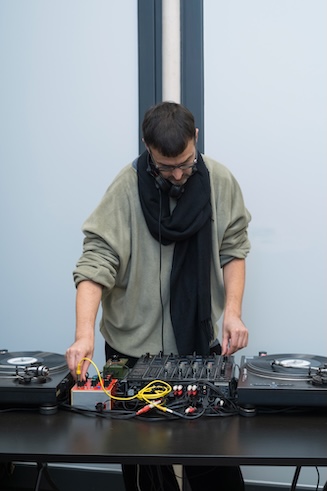
Opening
Klara Källström & Thobias Fäldt: The Space Between
Award ceremony
Camera Austria Award for Contemporary Photography by the City of Graz 2025 to
Jakob Ganslmeier & Ana Zibelnik
Photo: Natascha Reiterer -
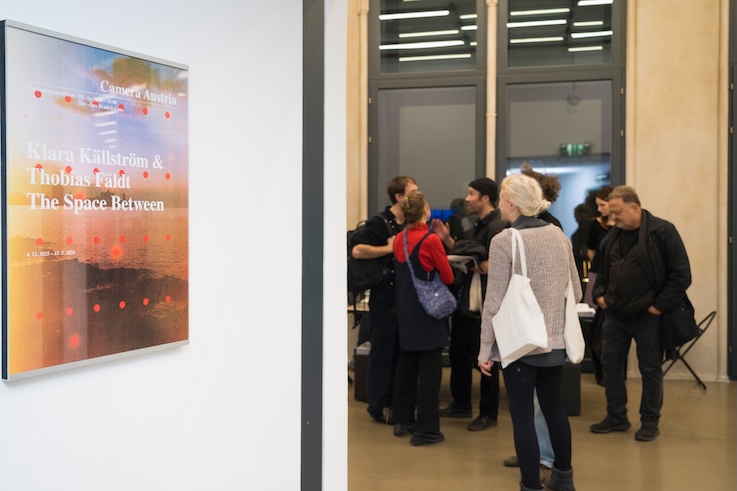
Opening
Klara Källström & Thobias Fäldt: The Space Between
Award ceremony
Camera Austria Award for Contemporary Photography by the City of Graz 2025 to
Jakob Ganslmeier & Ana Zibelnik
Photo: Natascha Reiterer