
Luise Marchand
Prospects of Winning
Infos
Opening
19.6.2026, 6 p.m.
Lecture Performancewith Luise Marchand and Christin Müller:
Speculation Is the Polite Attempt to Persuade the Future
18.8.2026, 6 p.m.
Duration
20.6. – 30.8.2026
Opening hours
Tue – Sun and bank holidays
10 a.m. – 6 p.m.
Guided tours
German, English
Free, on request:
exhibitions@camera-austria.at
+43 316 81555016
Curated by
Christin Müller
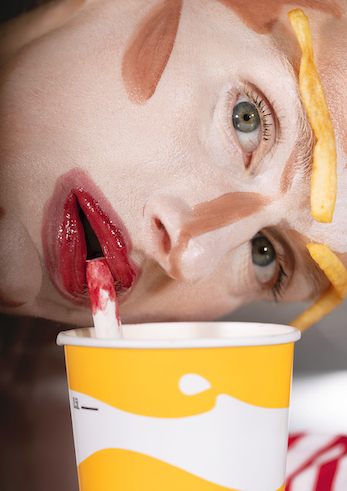
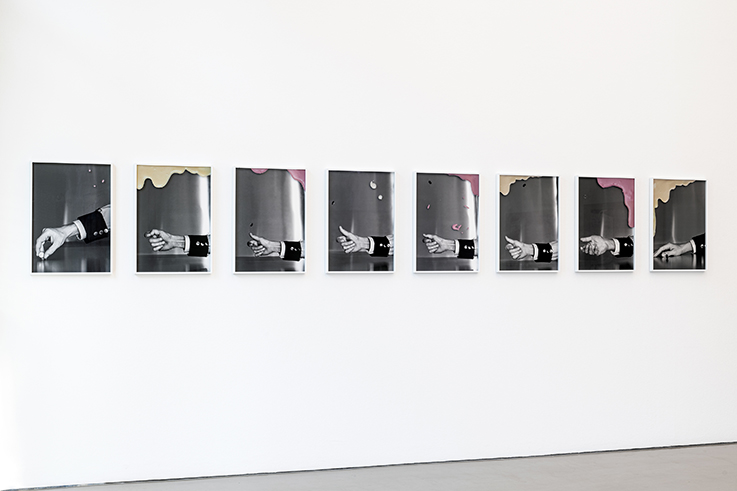
Luise Marchand, from: Schicht zur Sonne (Shift toward the Sun), 2026. Courtesy: the artist and Galerie K-Strich, Bremen. Copyright: Bildrecht, Vienna, 2026.
Intro
The economies of desire, the dynamics of capitalist profit-seeking, and the relationship between work and play are the central themes of Luise Marchand’s three groups of works on view in her exhibition at Camera Austria. The artist examines how humans and nature are being affected in times marked by maximal flexibility and multiple crises, drawing on the aesthetics and visual vocabulary of the advertising industry. She approaches her topics by immersing herself in various work and life realities, or by drawing on observations from her immediate surroundings. In Graz, the protagonists of Marchand’s works are snails meandering across banknotes, high-performance products, and the bodies of workers. By staging her images in the space, Marchand invites visitors to reflect playfully on our profit-driven meritocracy—and in doing so, to consider subversive strategies as well.
Prospects of Winning is the first institutional solo exhibition of the artist in Austria.
Read more →
Luise Marchand
Prospects of Winning
“No pain, no gain!” “Use it or lose it!” “Industry pays, idleness decays!” “From rags to riches!”—still today, such sayings remain deeply anchored in societies shaped by capitalism. They idealize a commitment to being actively involved, encourage people to work with motivation toward a better future, and culminate in the promise of Labor omnia vincit (Work conquers all). In our present day, which is characterized by maximal flexibility and shaped by multiple crises, the concepts of work-life balance and work-life blending are also vying for supremacy as an ideal way of life, while the optimization of bodies is invariably turning a new leaf.¹ The ways in which humans and nature are compelled to adjust in order to meet the ends of capitalist value creation are explored by Luise Marchand in her artistic work. By examining the economies of desire, she avails herself of the aesthetics and the visual vocabulary of the advertising industry, with the aim of subverting this imagery at the very same time through a precise selection of pictorial subjects and installation forms.
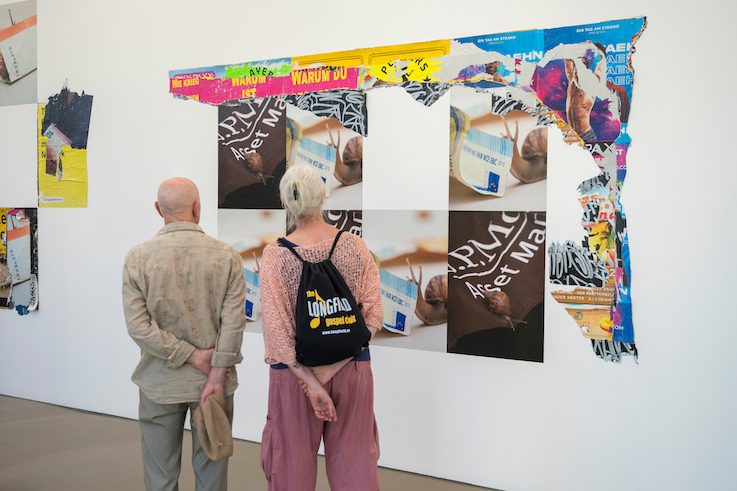
The global images and leitmotifs of the twenty-first century are hardly of any interest to snails. Thoroughly unimpressed by the aspirations of the meritocracy, these Mollusca in no way embody the ideal of a high performer. Instead, they are the living presence of maximal idleness. In Luise Marchand’s series Zeit ist Geld – eine Schnecke ist eine Schnecke (Time Is Money — A Snail Is a Snail, 2021), they wind their way across European currency—coins, paper bills, and plastic money—leaving a trail of slime behind. They peer over the edge of the banknote with their outstretched tentacle eyes, as if searching for a new home far beyond their natural habitat of damp meadows and forests. Here in the dry world of finance, thanks to macrophotography, the artist gives them their greatest performance opportunity yet: the snail shadow behind a banknote rises up to become a spectral behemoth. The elongated head of another snail takes on a dinosaurian air, at other times the creatures look quite cute or exude sexual energy when engaging in boozy contact with our currency.
The initial impetus for this series goes back to a common garden snail, which made its way across Luise Marchand’s tax return in 2020. The pandemic had suddenly turned conventional routines in everyone’s lives inside out. Like many others, the artist sought time outdoors in order to flee the isolation of the home, which is how it even came to the encounter of snail and finances in the first place. The stock market plummeted and then suddenly experienced dizzying heights. In paralyzed everyday life—with most people not even able to carry out their daily jobs—stocks, bonds, and exchange-traded funds became a newly discovered way of making money work for you. Countless spam emails sent around this time already touted in the subject line means of alternative payment or liquidity planning, promoted convenient investment opportunities, reassured anxious investors, referred to bailout packages running into the billions, or heralded an economic recovery at risk. Luise Marchand appropriated such promises as work titles for her snails, imposing upon them these tasks. The unwavering composure shown by the snails when they encounter the excesses of the unfettered financial sector is truly exemplary—at least for those dreaming of future riches with the help of “couch potato portfolios.” Don’t let anything ruffle your feathers, or: “A penny saved is a penny earned!”
In Graz, Luise Marchand is showing this series as a poster referencing public space. In 2021, while everyone was in lockdown during the pandemic, the artist put up 1,200 posters from this project all over the city as part of Berlin Art Week. A month later, she took down some of these posters, including several layers of posters put up by other people that had been pasted on top of or next to hers. Situated adjacently to ads for events that had likely been cancelled and in close proximity to a modern office building that was closed for the interim, these snails seem almost like an exposition on endless deceleration.
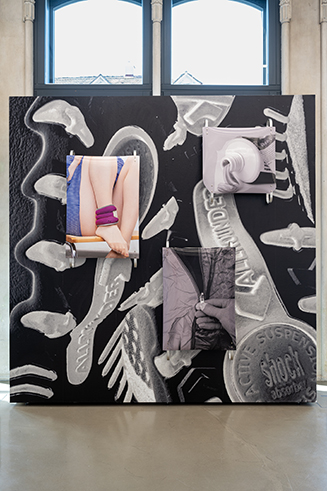
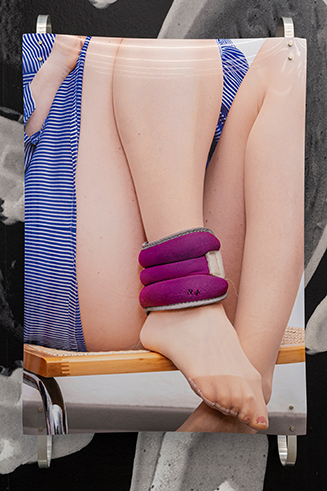
Yet we humans differ from snails in that we are ever seeking optimization. Always ready and on the move, and, most especially, always productive—these are qualities that everyone has taken to heart in postindustrial society. The challenge of the twenty-first century lies not in the physical strain of a heavily muscled laborer, but in the way people forget their bodies. Perpetual sitting and staring at screens, along with doomscrolling, binging, and being available at all times, make us weary, let our eyes dry out, and cause tension and trigger points. In Die Zeichen stehen gut (The Signs Are Good, 2016–ongoing), Marchand explores the many resources available for revitalizing and enhancing our bodies’ natural potential after becoming strained by work, leisure activities, and relationships. Some aids counteract bodily shortcomings, for instance compression tights enable long periods of standing, sitting, walking. Underarm pads hinder unfavorable sweat marks. Kinesiology tape relaxes muscles. There are also products that have an effect on the inner workings of our bodies, such as dietary supplements that keep our organs in check or sticks from the palo santo tree that bring mental clarity when used as incense. And yet other products support us in maintaining our on-the-go mentality: all-weather clothing, touchscreen gloves, disposable tableware, and finger toothbrushes help us to always perform highly, even when out and about.
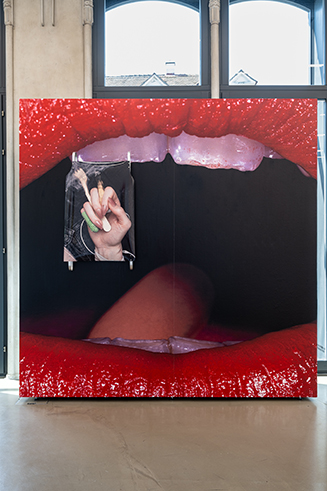
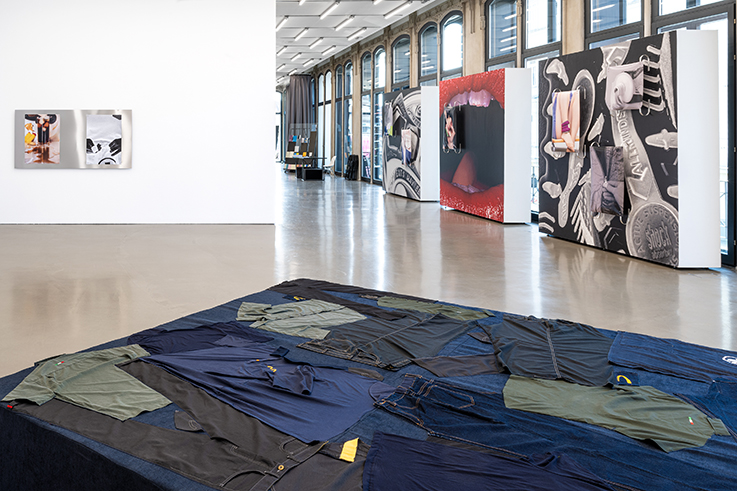
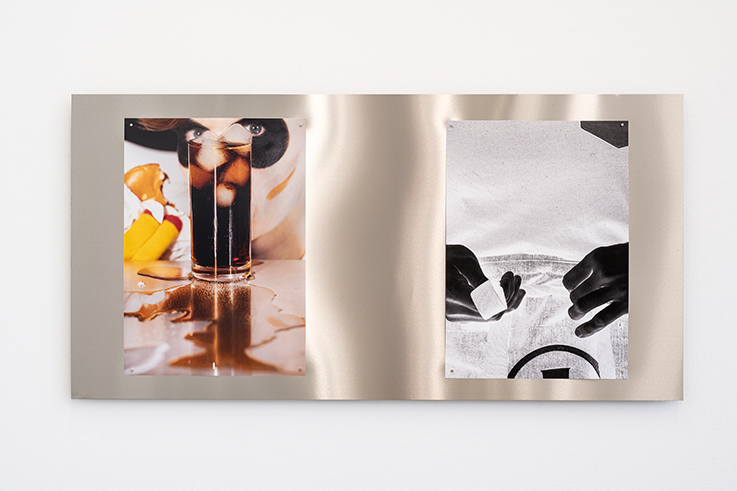
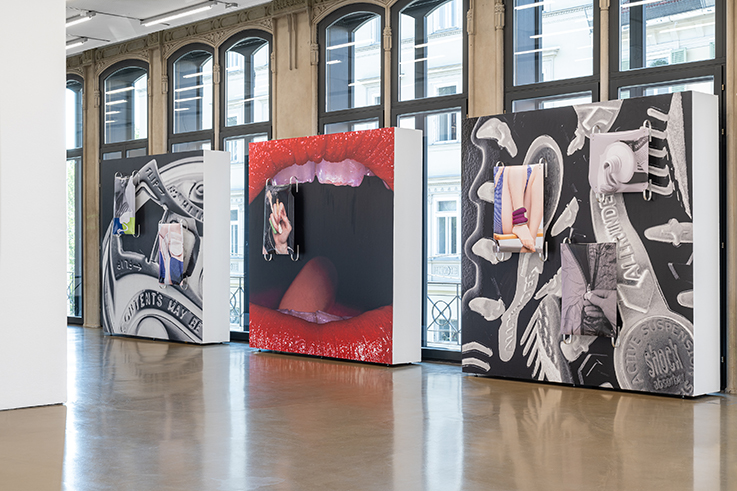
In her photographs, Luise Marchand borrows visual conventions from the advertising industry and elaborates monstrous abysses from the surfaces of the products, for instance when a health-giving pill is resting in a mouth glowing bright red in a closeup view, or when the instructions stamped onto the coffee cup assume a machinelike guise in the photographic enlargement. These products have lifestyle character in a dual sense: on the one hand, the bright neon colors exude sportiness coupled with hipness, while the shades of beige symbolize naturalness; on the other, there is a certain relentlessness to the way the body is optimized through certain objects. The products push us ruthlessly toward a state of always-ready-and-active, and this with a focus on bodies that are already as fit as possible. Bodies that still stand a chance of fitness gain, that are limber enough to satisfy the appetites of capitalism and consumption. Indeed, body shapes deviating from the norm will hardly fit into racy high-performance clothing. Truly ill bodies, ones that in the capitalist logic of value creation fall by the wayside due to physical or mental infirmity, ones where the afternoon nap is now no longer close to resembling a power nap, cannot be helped by muscle-tone-regulating exercises or digital detoxing. And for those who lack funds, well, staying in style isn’t going to be an option anyways.
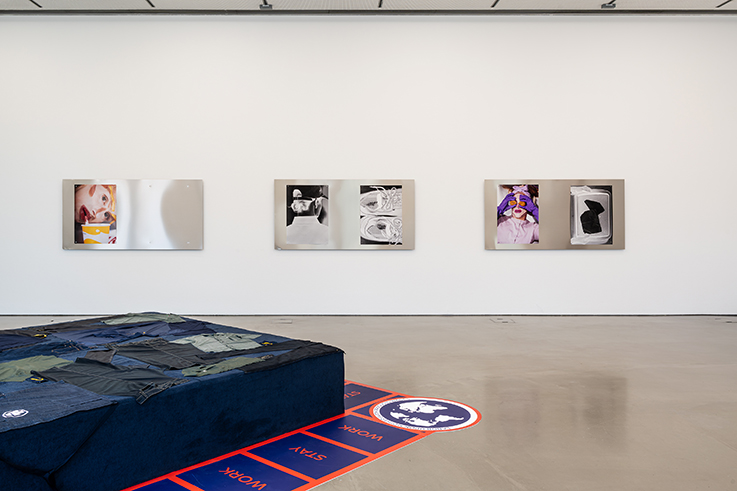
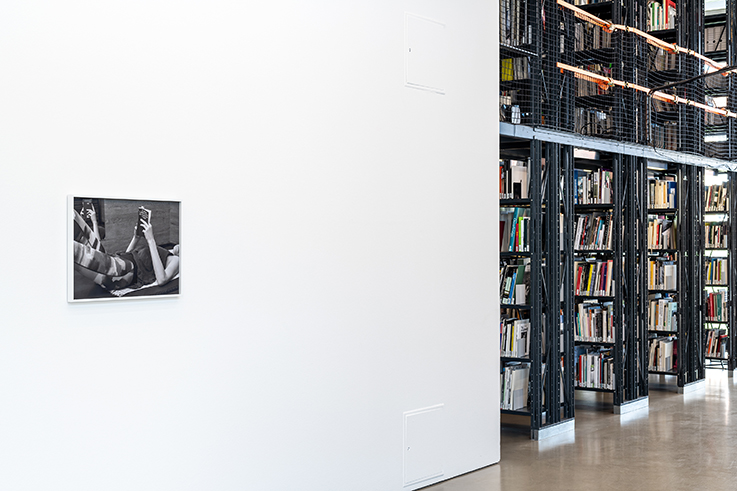
In Luise Marchand’s chosen form of installation, the photographs reveal themselves as vulnerable and less perfect than the products rendered, when she allows the photographic bodies of her pictures to be seen. The photos are hanging freely along metal arches, bending and moving, with curves and indentations. They invite viewers to look beyond the glossy surfaces and to engage with different perspectives. A photograph from the series shows a person in sportswear reclining and reading Eva Illouz’s book Cold Intimacies: The Making of Emotional Capitalism. In this volume, the author deals with “emotional capitalism,” defining it as “a culture in which emotional and economic discourses and practices mutually shape each other.”² Set in context with products that are perfecting bodies, we are left pondering the question of whether, in our performance-driven society, our connection to our own feelings has been completely disrupted—or is maybe no longer even cultivated? Perhaps these products are instead being used to streamline our emotions into neoliberal efficiency?
“Everyone is the architect of their own fortune,” reads another adage, and this one is truly persistent. But is it really true? Can anyone become a millionaire and thus attain personal contentment? For her new group of works called Schicht zur Sonne (Shift toward the Sun, 2026), Luise Marchand has delved into the beginning of the work hierarchy by taking a job as a rotational employee at McDonald’s. In order to consider labor conditions of the past, present, and future, let’s accompany the artist on her journey. Off we go!
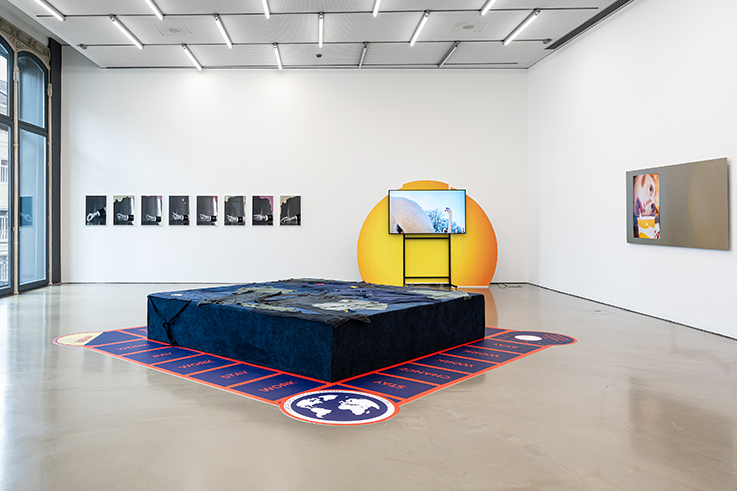
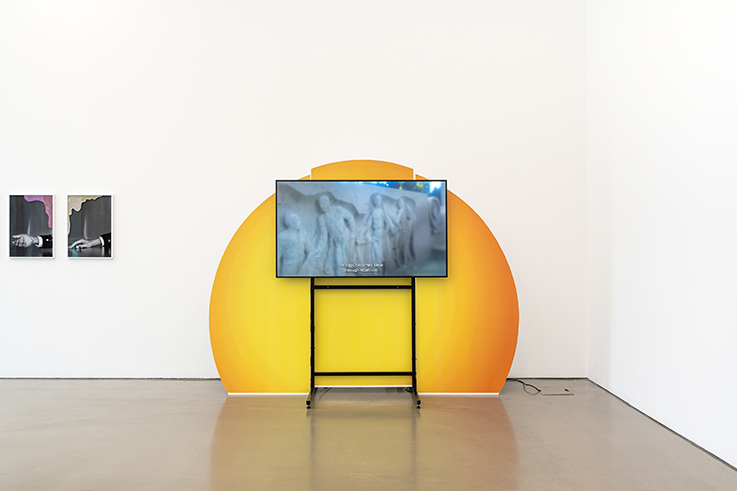
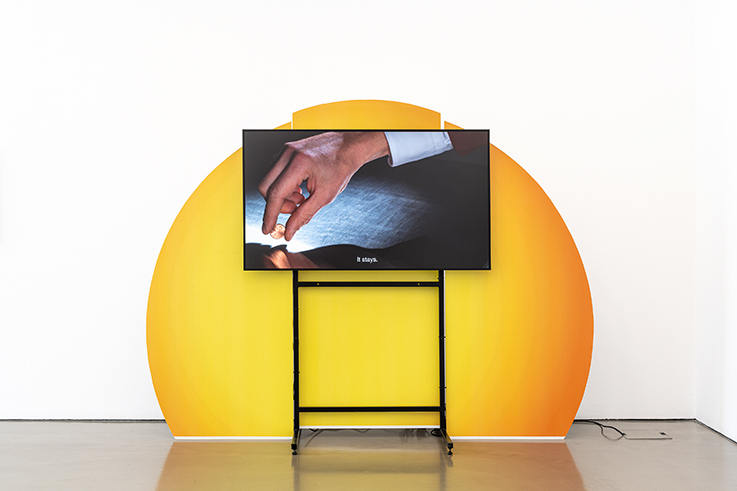
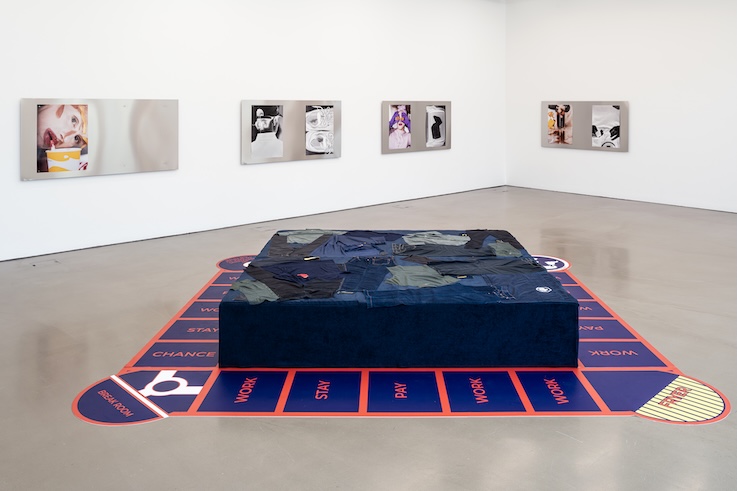
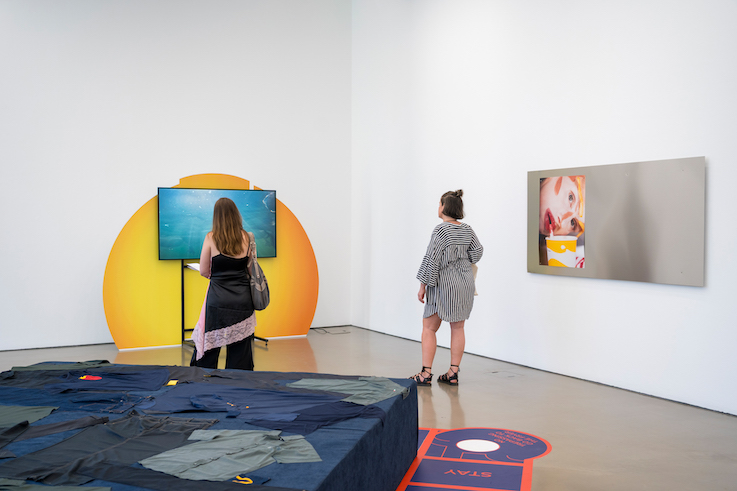
In the video work Schicht zur Sonne, the camera emerges from the fountain in front of the Chamber of Labor in Linz, which advocates for the social, economic, vocational, and cultural interests of workers. With a gaze speckled by water, we take in our surroundings. A relief by Alois Dorn from 1950 presents classic professions that engage the body or mind. Scholars in lab attire are seen on the one side, muscled metalworkers on the other. All male. In between these figures there is a humongous woman farmer holding a wicker basket with ears of grain in one hand and a hammer and laurel wreath in the other. Cut. Several suns dazzle us. They are arranged like the dots on a dice. Cut. Through a telescope we can see the factory premises of voestalpine AG. In Linz, this steel and technology corporation runs a fully integrated steel mill, encompassing all stages of the production process, including coking, blast furnaces, steelworks, hot and cold rolling mills, galvanizing, and strip coating. Just like in the factories of the late nineteenth century, nothing ever comes to a standstill. The workers slave away in a never-ending cycle of shifts. Breaks equate to loss. Cut. Suns shine on us again. Cut. An arm swings robot-like through the picture, against a backdrop of the food-service industry. The arm belongs to the body of the artist, who is walking through a McDonald’s branch at the end of her shift. Past the service counter, menu board, status screens, assembly line, deep fryers, warming cabinets, beverage taps, and piles of disposable packaging. Here, too, the processes are synchronized and divided into shifts. Only the promises are bigger: all new hires start at the deep fryers and can then work their way up to branch manager, at least theoretically. Cut. Sun. Cut. A McDonald’s cup meanders through a dirty stream. Cut. Changing clothes at the end of the shift. Out of the work clothes. Into everyday life. Cut. . . . And now back to the start. Off we go again! Accompanying these images are relentlessly beeping sounds, mirroring the insistent rhythm of the food-service industry, and we hear the voice of a woman who sounds experienced, explaining the rules of the job. These rules apply just as much to the game, with its playing fields spread out across the floor of the exhibition space. We are the game pieces. Or the workers in the video. Let’s play!
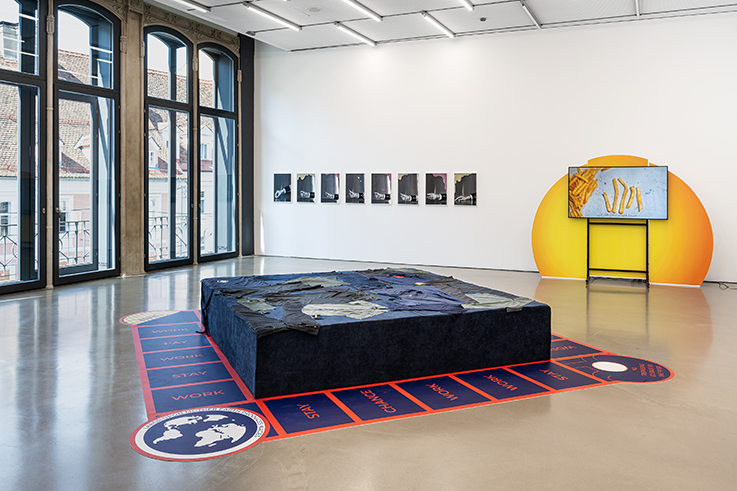
The game in the video and in space begins with Mother Earth and the tasks are WORK, STAY, PAY, FRYER, and CHANCE. The game structure is certainly reminiscent of Monopoly. However, Luise Marchand mainly references the predecessor game. In 1904, Elizabeth Magie Phillips had the Landlord’s Game patented, its objective being to shed light on economic decisions and on the negative ways that accumulation of wealth impacts others, as well as on the advantages of participating in a community spirit. Since the patent was sold, however, and the rules were transformed to those we know today, the focus has been on capitalist speculation and the maximization of individual profit at the expense of others: “ALWAYS trade to your advantage, never out of pity, and don’t lend money to other players! After all, you want to win yourself!”³
Luise Marchand borrows elements from both game approaches and transfers them to the situation in which low-income workers find themselves. Her game rules classify cash-flow management as a secondary concern. Instead, they describe the players’ position and opportunities for action—but most especially the limitations the players face.4 The field CHANCE stands out. This is where players get closest to the sun. Whatever it stands for. In order to peruse the video in a more comfortable position, the exhibition visitors are given the option of settling down on a platform. This seating has been upholstered in the workwear of the artist and her coworkers of different hierarchy levels. The surface now providing visitors with comfort once served as a protective shell for the bodies of the shift workers.
Also belonging to the work group Schicht zur Sonne are images with the title Im Zustand der Verwertbarkeit (In a Usable Condition), which bring used working materials and personnel into play. In silkscreen prints, the disposable gloves, apron, and baseball cap pay reference to hygiene requirements, while the inside part of the work shoes bear the mantra of overzealous workers: “Born to Work.” The McDonald’s mascots in the photographs are no longer as happy as a clam. Because these figures are now considered outdated and inappropriate, the company has completely removed the former role models from its marketing. Luise Marchand brings the clown Ronald McDonald, the purple taste bud Grimace,5 and the thief Hamburglar back to life.5 The artist takes a sarcastic-humorous approach to reviving and exaggerating their original personality traits by staging the jobless mascots among sales products, thus allowing them to indulge their whims to the fullest.
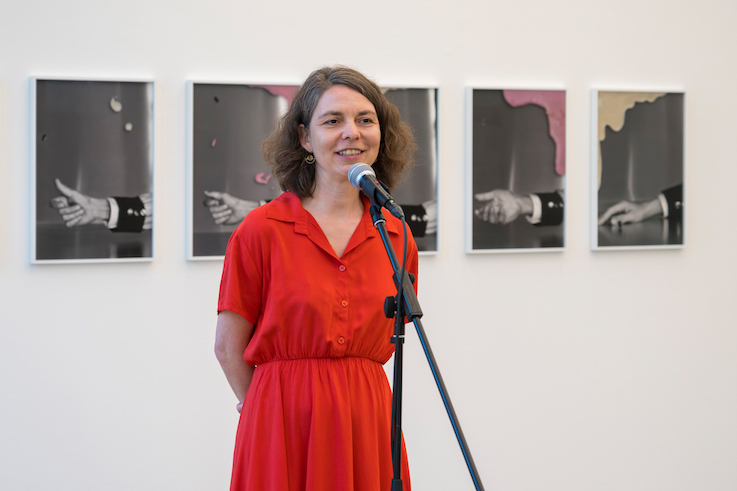
With the title Schicht zur Sonne, Luise Marchand is not only referencing shift work. She is also alluding to the time we invest in working on our position in society, and on the piles of tasks and things we do to bring us closer to fulfilling our desires and yearnings. She evokes a flying penny tossed by a hand emerging from a cut-off jacket sleeve to demonstrate how both luck and deception play a role in successfully liberating us from a shift or social class. A common tactic in advertising is employed here, with the clothing used only as a fragment, yet there is nothing actually being concealed. In the sequence of images titled Die unsichtbare Hand (The Invisible Hand), the coin never lands on one of its sides. It could still go either way: heads or tails, win or lose, work or life, money or love. How high are the stakes? How masterful the deception?
In her works, Luise Marchand also speaks of subversive self-empowerment, evidenced for instance when, despite the pandemic lockdowns, she found her own way of exhibiting Zeit ist Geld – eine Schnecke ist eine Schnecke. With a hand trying to juggle too many lifestyle products at once in an attempt to make the most of the time available (lighting some incense for calm, while quickly eating something with a wooden fork and brushing one’s teeth with music playing in headphones). And with McDonald’s workers secretly peeling the Monopoly stickers off the discarded packaging and, against the rules, entering the sweepstakes themselves, so as to attain a new status in life and move closer to the sun.
¹ In Luise Marchand’s group of works called Liquid Company – Flüssige Gesellschaft (2020–21), an exploration of the two concepts of life plays a central role.
² Eva Illouz, Cold Intimacies: The Making of Emotional Capitalism (Cambridge: Polity Press, 2007), p. 5.
³ Monopoly, “Your Game, Our Rules!” Hasbro, Pawtucket, Rhode Island, 2025, n. p.
4 The connection between McDonald’s and Monopoly is no coincidence. In the US, the fast-food restaurant and “the famous game for the big deal” have been collaborating since 1987. In Germany, there has been an annual promotion period since 2023. With stickers on select products, customers can win Monopoly streets and stations, and with this money they can purchase trips, cars, and products from the technology and lifestyle sectors.
5 As the only mascot to be given a rebranding, Grimace resurfaced as a brand ambassador in Germany and Austria in 2025.
Christin Müller
In her artistic work, Luise Marchand examines topics related to postindustrial society, capitalist value-creation processes, and the dynamics of economies of desire. The point of departure for her projects are always her own photographs, which are strongly distinguished by the aesthetics of advertising photography, as is reflected in both form and concept, with the latter extending into the exhibition space. Marchand studied as a Meisterschülerin under Prof. Peter Piller and Prof. Peggy Buth at the Academy of Fine Arts Leipzig (DE) until 2019. Her works have been shown at various venues, including: EIKON Schauraum, Vienna (AT), Dom Museum, Vienna, Bauhaus Dessau (DE), Fotomuseum Winterthur (CH), Museum Folkwang, Essen (DE), and Museum der bildenden Künste, Leipzig. She lives in Berlin (DE).
Christin Müller is a freelance curator and author living in Leipzig (DE). She is interested in artistic documentary photography, in the changing materiality of photography, and in the limits of the medium. After earning a degree in cultural studies from the University of Hildesheim, she was a scholarship recipient in the program “Museum Curators for Photography” at the Alfried Krupp von Bohlen und Halbach Foundation. Most recently, she (co)curated the exhibitions It’s the 21st Century that Expects Everything from You (HAUNT, Berlin, DE), Images of the Present (Staatsgalerie Stuttgart, DE), and Sophie Thun: Trails and Tributes (Kunstverein Hildesheim, DE). Müller teaches regularly at the University of Leipzig and writes for journals, exhibitions catalogues, and artist publications.
Installation Views
-
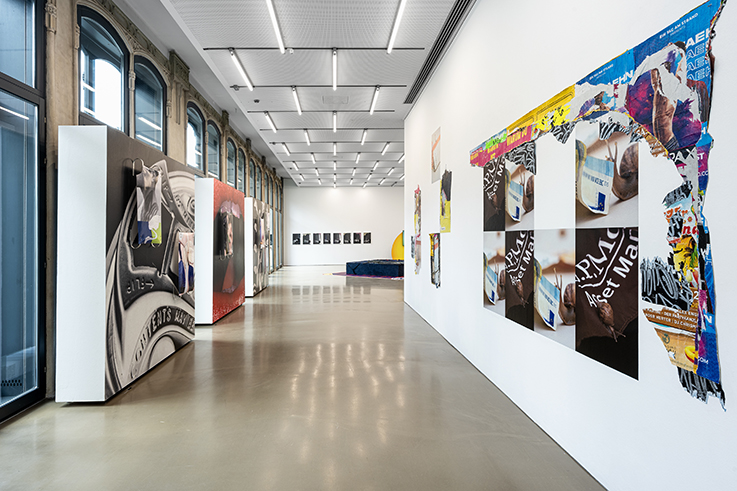
Luise Marchand: Prospects of Winning
Camera Austria 2026
Photo: Markus Krottendorfer -
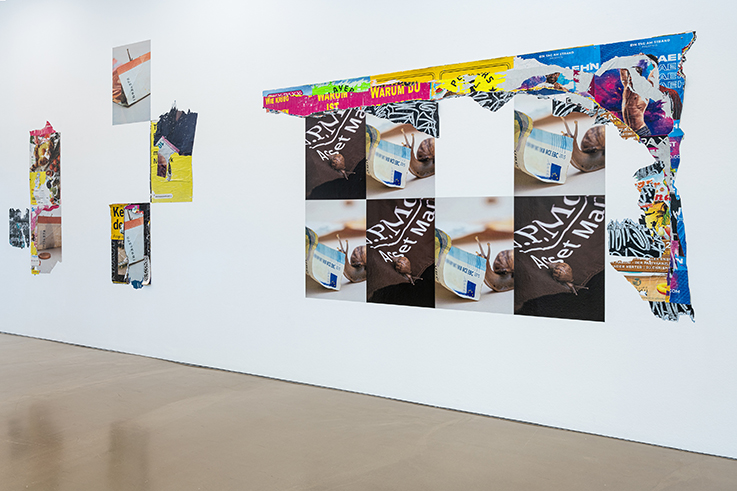
Luise Marchand: Prospects of Winning
Camera Austria 2026
Photo: Markus Krottendorfer -
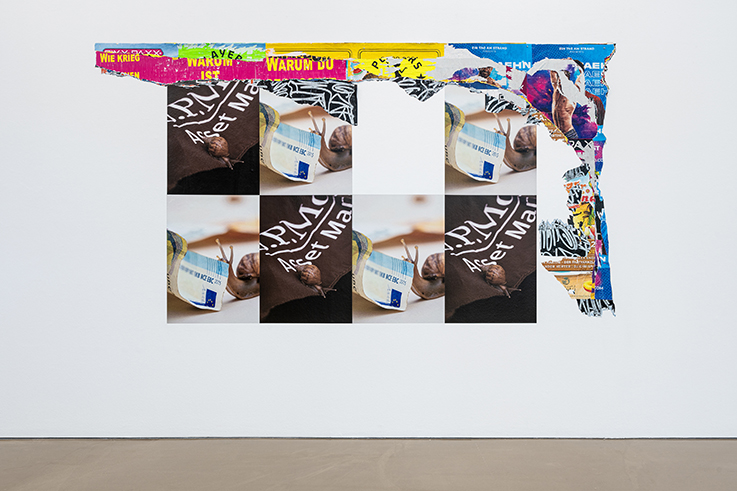
Luise Marchand: Prospects of Winning
Camera Austria 2026
Photo: Markus Krottendorfer -
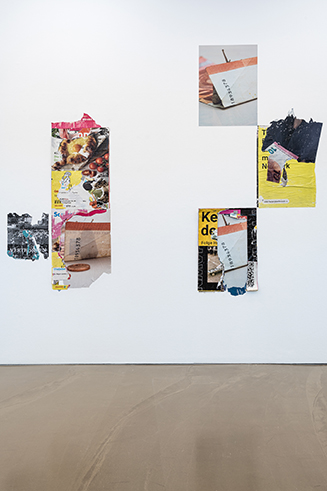
Luise Marchand: Prospects of Winning
Camera Austria 2026
Photo: Markus Krottendorfer -
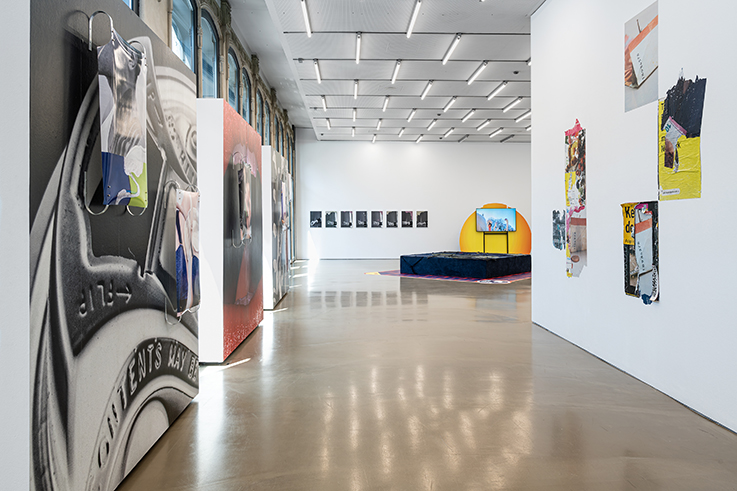
Luise Marchand: Prospects of Winning
Camera Austria 2026
Photo: Markus Krottendorfer -
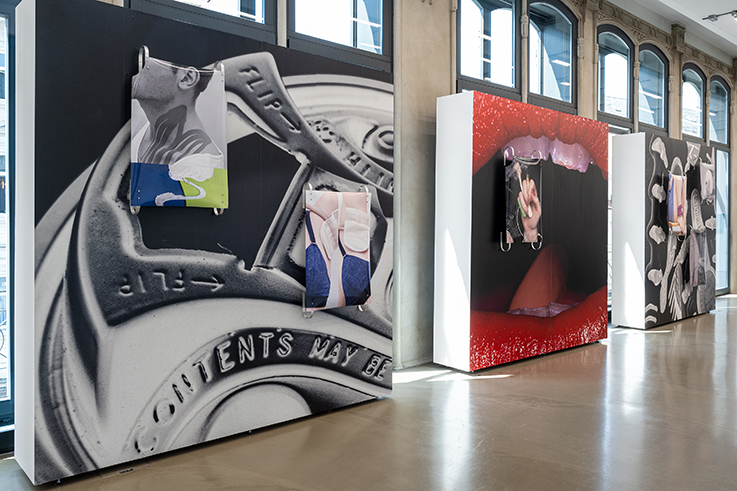
Luise Marchand: Prospects of Winning
Camera Austria 2026
Photo: Markus Krottendorfer -
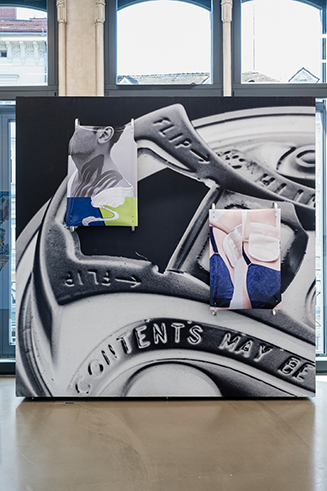
Luise Marchand: Prospects of Winning
Camera Austria 2026
Photo: Markus Krottendorfer -
Luise Marchand: Prospects of Winning
Camera Austria 2026
Photo: Markus Krottendorfer -
Luise Marchand: Prospects of Winning
Camera Austria 2026
Photo: Markus Krottendorfer -
Luise Marchand: Prospects of Winning
Camera Austria 2026
Photo: Markus Krottendorfer -
Luise Marchand: Prospects of Winning
Camera Austria 2026
Photo: Markus Krottendorfer -
Luise Marchand: Prospects of Winning
Camera Austria 2026
Photo: Markus Krottendorfer -
Luise Marchand: Prospects of Winning
Camera Austria 2026
Photo: Markus Krottendorfer -
Luise Marchand: Prospects of Winning
Camera Austria 2026
Photo: Markus Krottendorfer -
Luise Marchand: Prospects of Winning
Camera Austria 2026
Photo: Markus Krottendorfer -
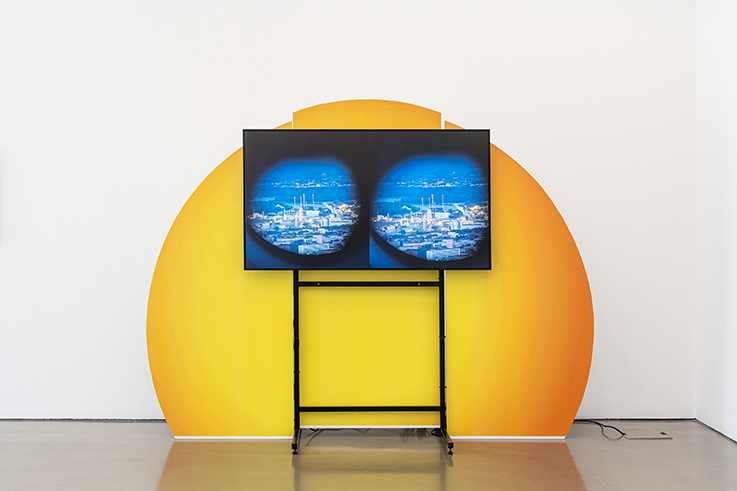
Luise Marchand: Prospects of Winning
Camera Austria 2026
Photo: Markus Krottendorfer -
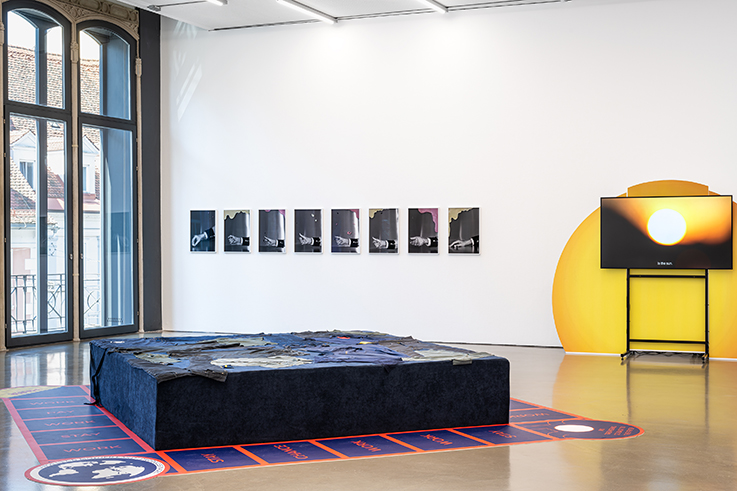
Luise Marchand: Prospects of Winning
Camera Austria 2026
Photo: Markus Krottendorfer -
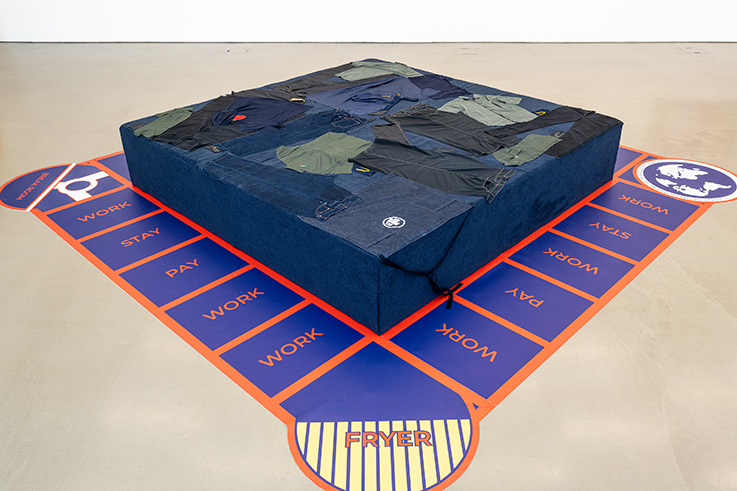
Luise Marchand: Prospects of Winning
Camera Austria 2026
Photo: Markus Krottendorfer -
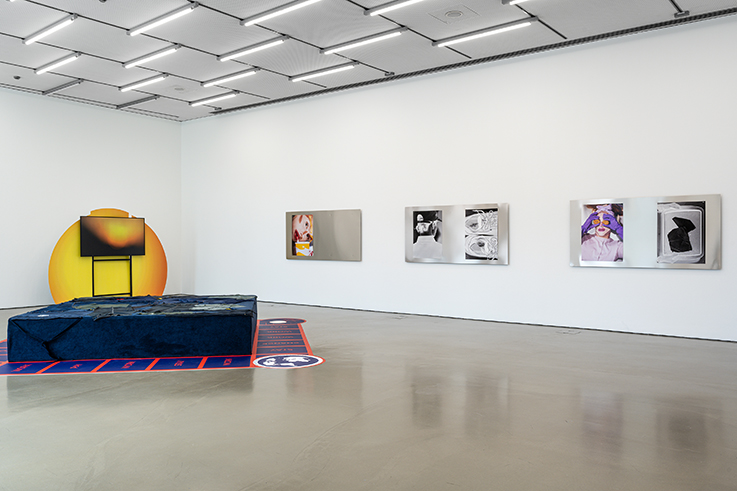
Luise Marchand: Prospects of Winning
Camera Austria 2026
Photo: Markus Krottendorfer -
Luise Marchand: Prospects of Winning
Camera Austria 2026
Photo: Markus Krottendorfer -
Luise Marchand: Prospects of Winning
Camera Austria 2026
Photo: Markus Krottendorfer -
Luise Marchand: Prospects of Winning
Camera Austria 2026
Photo: Markus Krottendorfer -
Luise Marchand: Prospects of Winning
Camera Austria 2026
Photo: Markus Krottendorfer -
Luise Marchand: Prospects of Winning
Camera Austria 2026
Photo: Markus Krottendorfer -
Luise Marchand: Prospects of Winning
Camera Austria 2026
Photo: Markus Krottendorfer
Opening
-
Opening
Luise Marchand: Prospects of Winning
Camera Austria 2026
Photo: Natascha Reiterer -
Opening
Luise Marchand: Prospects of Winning
Camera Austria 2026
Photo: Natascha Reiterer -
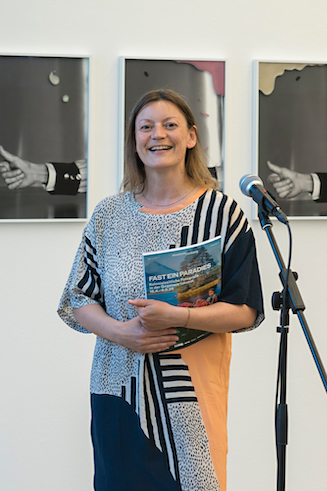
Opening
Luise Marchand: Prospects of Winning
Camera Austria 2026
Photo: Natascha Reiterer -
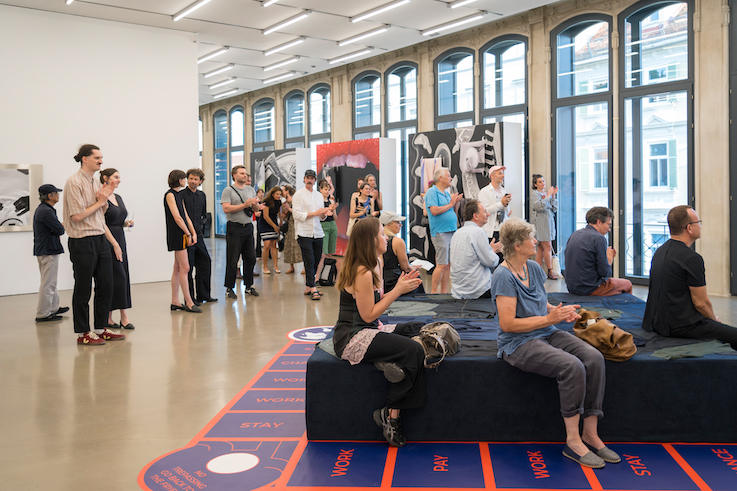
Opening
Luise Marchand: Prospects of Winning
Camera Austria 2026
Photo: Natascha Reiterer -
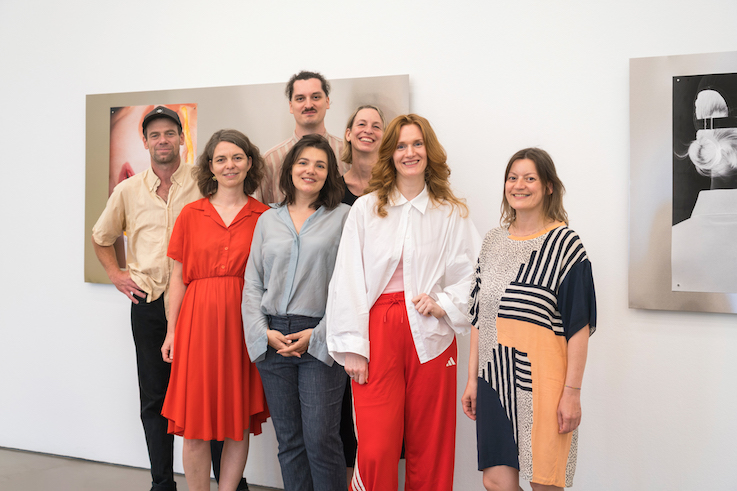
Opening
Luise Marchand: Prospects of Winning
Camera Austria 2026
Photo: Natascha Reiterer -
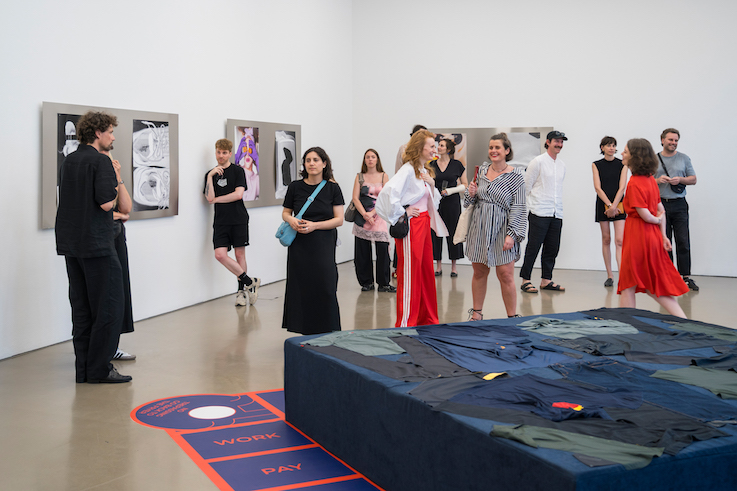
Opening
Luise Marchand: Prospects of Winning
Camera Austria 2026
Photo: Natascha Reiterer -
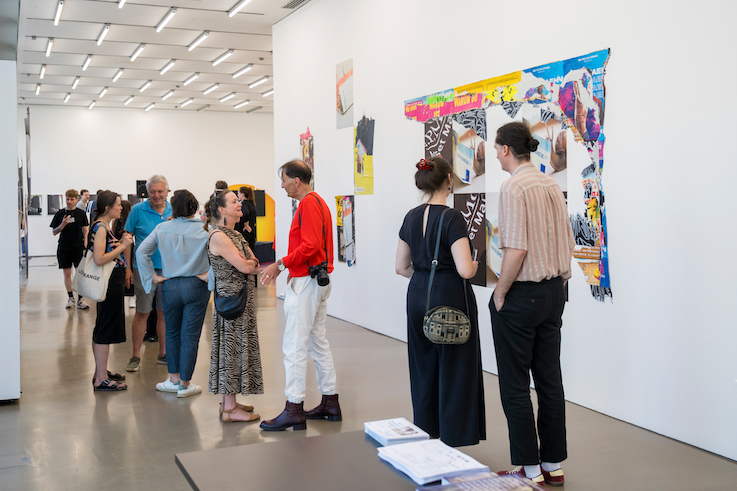
Opening
Luise Marchand: Prospects of Winning
Camera Austria 2026
Photo: Natascha Reiterer -
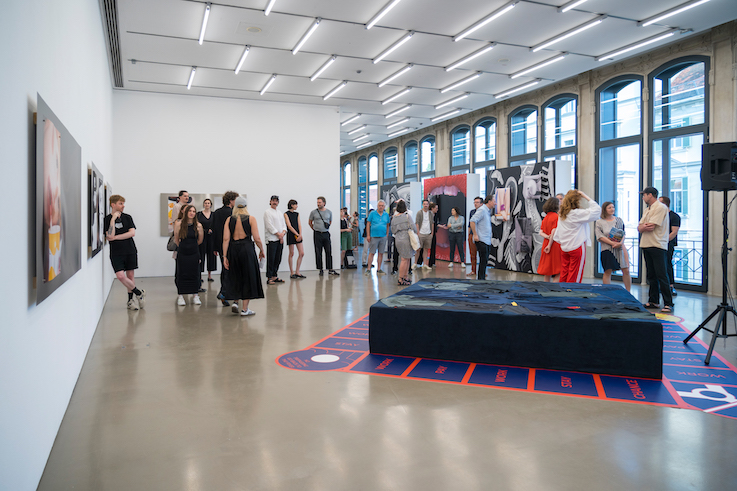
Opening
Luise Marchand: Prospects of Winning
Camera Austria 2026
Photo: Natascha Reiterer -
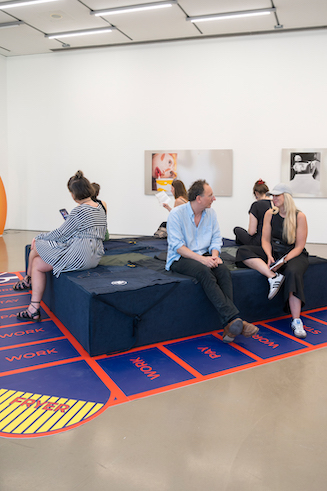
Opening
Luise Marchand: Prospects of Winning
Camera Austria 2026
Photo: Natascha Reiterer -
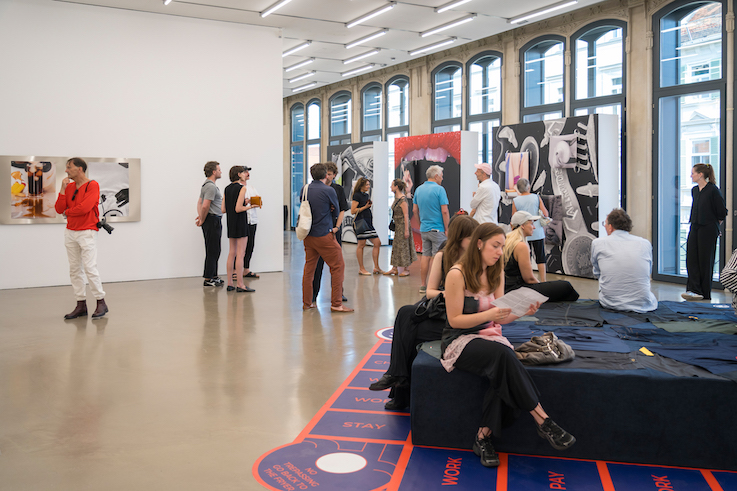
Opening
Luise Marchand: Prospects of Winning
Camera Austria 2026
Photo: Natascha Reiterer -
Opening
Luise Marchand: Prospects of Winning
Camera Austria 2026
Photo: Natascha Reiterer -
Opening
Luise Marchand: Prospects of Winning
Camera Austria 2026
Photo: Natascha Reiterer -

Opening
Luise Marchand: Prospects of Winning
Camera Austria 2026
Photo: Natascha Reiterer