
“They doubt my sanity and think I’ve gone crazy.”
Lidia Beccaria Rolfi, Helena Kuchar-Jelka: Women and Resistance—Repressed Memories
Rebekka Bauer in conversation with Reinhard Braun
Infos
“They doubt my sanity and think I’ve gone crazy.”
Lidia Beccaria Rolfi, Helena Kuchar-Jelka: Women and Resistance—Repressed Memories
Rebekka Bauer in conversation with Reinhard Braun
Tuesday, 15.9.2026, 6 p.m.
Exhibition space Camera Austria
In German language
Free admission
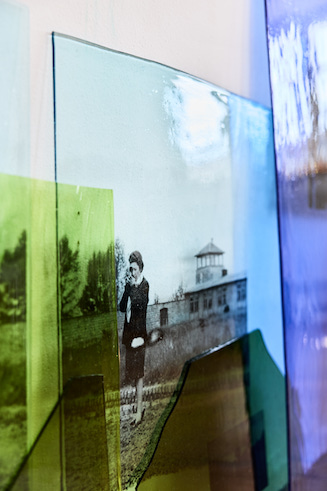
Rebekka Bauer, Erinnern, Sorge(n) Tragen, Widerstand Leisten (Lidia Beccaria Rolfi), 2026. Photo: Franziska Schrödinger.
Intro
In the scope of the EU project “Art of Remembrance: Contemporary Art Meets World War II Heritage,” Rebekka Bauer had the opportunity to spend two months on a study trip in Paraloup and Cuneo, in the Italian region of Piedmont. There, while exploring the archive of the Nuto Revelli Foundation, she came upon the story of Lidia Beccaria, a young Italian teacher who had joined the resistenza in 1944. Due to a denunciation, she was soon arrested in April 1944 and, after being detained in various camps, was deported to Ravensbrück, arriving in June 1944. Bauer initiated the project “Remembering, Caring / Enduring Sorrow, Offering Resistance (Lidia Beccaria Rolfi)” in 2026—in conjunction with photographs and drawings, as well as diary entries, by Lidia Beccaria from the Rolfi family’s private archive.
In conversation with Reinhard Braun, Rebekka Bauer will discuss what this history can tell us today, and in which form we can bring this approach to resistance chosen by women into the present. Of interest here is the relationship between family archives and the role they play in remembrance as a vivid social process, but also, not least, the ways in which women engaging in resistance have been able to change the role of women in society on the whole—and which acts of resistance and forms of ignorance they encountered in the process, in order to ultimately become part of a collective culture of remembrance. In a certain sense, it involves the archaeology of a historical feminism that prevailed in the face of persecution and violence—and yet long led a precarious existence.
The history of the resistenza and the recollections of Lidia Beccaria Rolfi, which she documented in two books, are read in relation to a biography written by another woman who was active in the resistance: Helena Kuchar-Jelka, the most well-known female partisan in Carinthia. Kuchar-Jelka likewise spoke of the central role played by women in the resistance, but also of the history of the Slovenian minority and the repression and persecution this group experienced.
Both women attest to how strongly women succeeded, as part of a collective outcry against injustice and violence, in breaking through the endurance and silence ascribed to them, thus leaving behind the limitations of traditional womanhood.