
Valérie Jouve
The Outside Inside
Infos
Opening
25.9.2026, 4 p.m.
Guided tour
with the curator Walter Seidl in the frame of steirischer herbst
Partner Program exhibitions tour3.10.2026, 12 p.m.
ORF Long Night of Museums
3.10.2024, 6 p.m.–12 a.m.
Guided tours:
7 p.m., 9 p.m.
Duration
26.9. – 22.11.2026
Opening hours
Tue – Sun and bank holidays
10 a.m. – 6 p.m.
Guided tours
German, English
Free, on request:
exhibitions@camera-austria.at+43 316 81555016
Curated by
Walter Seidl
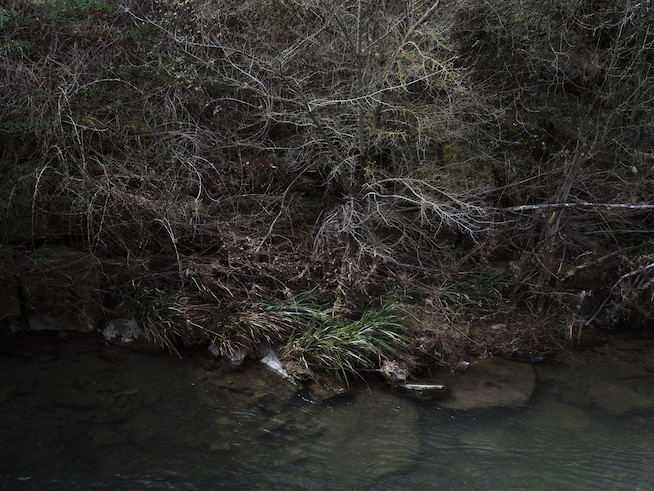
Sans Titre (Les Plantes) / Ohne Titel (Die Pflanzen), 2025/2026. Courtesy: die Künstlerin und Xippas, Paris; Genf; Punta del Este. Copyright: Bildrecht, Wien 2026.
Intro
In her photographic installations, Valérie Jouve embarks on an anthropological journey through space, where human beings, architecture, and nature obtain the same level of importance as markers of identity. They enter into a dialogue that leads to specific forms of narration. For her exhibition at Camera Austria, the artist has outlined an exact dramaturgy, where the photos are presented in various dimensions, materializations, and arrangements. Whether rural existence in certain regions of France, urban environments, or life in Palestine, Jouve observes hybrid forms of community and the relation to their surroundings. The focus on Palestinian cities is also evident in a digital slide show. The photographs are arranged to form stark contrasts, so as to highlight the personalities of the portrayed subjects. In the work titles, there are subtle remarks on the names of the respective people shown in the portraits. By combining landscape with portraiture, the artist creates visual realms beyond the notion of reportage, denoting new lines of sight and axes of vision.
Read more →Valérie Jouve
The Outside Inside
Valérie Jouve’s photographic and filmic oeuvre interrogates the relationship between human subjects and the environments they inhabit. These environments expand to all kinds of spheres, ranging from fauna and flora to open landscapes, or to architectural and urban sites. Her artistic practice, which emerged in the 1990s, is grounded in an anthropological sensitivity that aligns her with traditions of documentary photography while simultaneously challenging its conventions. Jouve’s images resist any simple categorization: they are neither straightforward portraits nor neutral urban studies. Instead, they construct what the artist calls “figures,” composite forms that reveal how bodies, gestures, and architectures, but also trees and rocks, intertwine in order to represent a living space. For her exhibition at Camera Austria, the artist has outlined an exact dramaturgy, where the photos are presented in various dimensions, materializations, and overlapping arrangements. Whether life in France or in Palestine, in urban or rural environments, Jouve’s work centers on the notion of living beyond any territorial boundaries. The photographs’ meticulous arrangement is culled from an archive of various decades, and through stark contrasts it creates a body of images consisting of subjects and landscapes, which enter into a dialogue marked by specific rhythms and tonalities. In the exhibition, the visible surface of the individual photographs forms an overall, “outside” dimension which has to be scrutinized in order to understand their deeper, “inside” meaning.
Jouve positions individuals within the respective surroundings in ways that foreground tension, movement, and constraint. In the exhibition space, the photos are arranged in a choreographed manner that creates particular axes of seeing and meaning and invites spectators to embark on a visual journey. On the first long wall of the show, she carefully lays out her visual narrative with a variety of close-ups depicting nature: flowers, trees, branches, rocks, and green leaves. The subjects in Jouve’s photographs often appear absorbed in their own trajectories, yet their presence becomes a lens, which, while perceived through the photographic lens, mirrors the structural dynamics of city and country life. The artist’s framing emphasizes verticality, repetition, and the monumental scale of contemporary architecture, suggesting how built environments shape modes of being and patterns of circulation, as well as the social conditions their inhabitants are embedded in. In the exhibition The Outside Inside, Jouve demonstrates that her photographic and artistic practice can be regarded as a refusal of narrative closure; instead, it invites viewers to confront the images as open-ended encounters. This strategy associates her work with critical discourses in visual anthropology and urban studies, where the city is understood as a dynamic field of interactions rather than a static backdrop. Jouve foregrounds the lived experience of subjects navigating through spaces which are marked by globalization, migration, war, and social fragmentation. Her work contributes significantly to debates on the politics of representation, offering a visual grammar that captures both the agency of individuals and the structural conditions that shape their everyday conduct.
Jouve’s photographic and filmic oeuvre, which started in France, is characterized by a sustained engagement with questions of urban or rural space and the inscribed human presence. Her special relation to Palestine, which has been developed through multiple projects since 2008, extends these concerns into a context where spatial experience is inseparable from geopolitical conflict. The result is a body of work that neither illustrates nor documents the conflict directly but instead interrogates, through particular arrangements, how people inhabit landscapes marked by occupation, surveillance, and fragmentation. Rather than presenting individuals as isolated subjects, her arrangements situate them within the dynamic environments they traverse. This led to the exhibition En Attente (On Hold) at the Centre Pompidou in 2010, which was exclusively dedicated to Palestine, the 16mm film Traversée (Crossing) in 2012, and a slideshow on the six cities Bethlehem, Hebron, Jericho, Jerusalem, Nablus, and Ramallah. In 2014, Jouve realized the project Cinq femmes, la Palestine, des fleurs en plein désert (Five Women, Palestine, Flowers in the Middle of the Desert) at MAC VAL in Vitry-sur-Seine.
When it comes to Palestine, the artist’s conceptual framework becomes a means to explore how political violence materializes in space and how individuals continue to assert presence within constrained geographies. Jouve’s works produced in the West Bank foreground the tension between movement and restriction. The artist often frames her subjects walking, waiting, or simply standing—gestures that acquire heightened significance in a territory where mobility is regulated by checkpoints, walls, and military infrastructures. The portraits in the exhibition at Camera Austria mostly show people in Palestine. Although Jouve’s works are all Untitled, the names of the portrayed people always appear in parentheses, and she photographs them in different locations, for instance in Jericho, Sans Titre (Les Figures avec Samar) (Untitled [The Figures with Samar], 2012), or in Jerusalem, Sans Titre (Les Personnages avec Asad Abusway) (Untitled [The Characters with Asad Abusway], 2013/2018). While the Palestinian portraits come in color, there are exceptions in black and white from France, such as Sans Titre (Les Personnages avec Marie Le Gall) (Untitled [The Characters with Marie Le Gall], 2022), which was taken in Vélizy-Villacoublay near Paris and appears in the midst of the first wall on nature.
In other instances, the landscape itself becomes the protagonist—hills cut by roads reserved for settlers, agricultural terraces interrupted by barriers, and urban peripheries. There is one significant photo from Jericho: Sans Titre (Les Paysages) (Untitled [The Landscapes], 2011–12). Here we see a group of empty chairs in front of a brick building in bright sunlight. For Jouve, emptiness and waiting constitute some of the metaphors for life in Palestine, as the title of her show at the Centre Pompidou suggested. Through these images, where time seems to stand still, she constructs what could be described as a phenomenology of occupation, attentive to how spatial discontinuities affect bodily experience. In general, her work avoids sensationalism; it is grounded not in the pursuit of dramatic scenes but in a sustained, almost meditative observation of daily life. Dean Inkster remarks that there is even an “absence of any iconic reference to the circulation of commodity signs that populate urban space.”¹ With this strategy she represents political realities without reproducing the spectacle of suffering.
Jouve’s Palestinian projects contribute to the debate on visual politics, spatial theory, and postcolonial critique. Her practice resonates with that of thinkers such as Edward Said or Eyal Weizman, who analyze how power operates through geography. Jouve’s images, however, do not illustrate theory; they offer their own form of spatial analysis, rooted in the sensory and affective dimensions of space. Through her sustained commitment to Palestine, she expands the scope of contemporary photography, demonstrating how artistic practice can illuminate the entanglement of space, politics, and human presence. Her engagement with Palestine can be understood most productively through a triad that foregrounds spatial politics, phenomenology, and the ethics of representation. Her work does not simply depict a conflict zone; the arrangements in the exhibition interrogate how power is inscribed in space and how bodies negotiate that inscription. This makes her practice relate to critical geography, postcolonial theory, and contemporary debates on the politics of visibility.
The Palestinian landscape in the artist’s photographs is never a neutral backdrop; rather, it is a politically loaded environment. Her images echo the arguments of Weizman, who in his seminal publication Hollow Land ² describes the West Bank as an “architecture of occupation,” where roads, walls, and settlements function as instruments of control, constituting moments of “slow violence,” which are designed to strangulate Palestinian communities and dominate the landscape through permanent surveillance and strategic management. Jouve’s framing emphasizes these spatial discontinuities: abrupt borders, fragmented terrains, and circulation routes that privilege some bodies while restricting others. Terraces, olive groves, and hillsides carry traces of cultivation, displacement, and territorial claims. By foregrounding landscape, she aligns with postcolonial ecologies, where land is understood as a site of memory and contestation. Her images do not monumentalize these landscapes; they show it as a lived, worked, and multiply utilized space.
Composed as one narrative chain, the exhibition The Outside Inside includes some of Jouve’s well-known and frequently presented photographs, as well as her latest work on life in Palestine. At the entrance of the exhibition to the left, the artist places one of the four partitions with a large image of the Bethlehem wall, a concrete demarcation (8 meters high) that forms part of the Israeli West Bank barrier: Sans Titre (Les Paysages) (Untitled [The Landscapes], 2012). Built in the early years of the new millennium, it encircles the city, severing historic ties to nearby Jerusalem while restricting Palestinian movement. As mentioned above, the first monumental wall presents itself as a carefully orchestrated composition that pays tribute to the diverse morphologies of living organisms. The latter is also manifested on the next wall around the corner, this time in Poitiers, with only a single, large-scale photograph of a majestic tree, Sans Titre (Les Arbres) (Untitled [The Trees], 2026). The tree borders the image with Asad looking at an olive tree in Palestine. On another partition wall, we find one of Jouve’s emblematic photographs, Sans Titre (Les Personnages avec Ilham Riffi) (Untitled [The Characters with Ilham Riffi], 1999), which was shot in New York and shows a black-haired woman dressed in black, holding one hand to her ear while putting the other across her abdomen. Riffi has become a recurrent character in Jouve’s work. The image conjures up unknown scenarios in a territory that triggers notions of fear. The latter is also the case with the large photo Sans Titre (Les Situations) (Untitled [The Situations], 2009/2018), which shows a fire outburst in the Cévennes region. One black-and-white image, which the artist has frequently used in recent exhibits, is shown on wallpaper running across the left corner area of the room, depicting some heavy industrial machinery in Saint-Étienne: Sans Titre (Les Machines) (Untitled [The Machines], 1988/2018). In addition, Jouve presents her above-mentioned work on the six Palestinian cities as a projection onto the floor. Her formal strategies—such as long shots, careful framing, and attention to spatial rhythm—always constitute a political critique because they refuse overt didacticism. The work demonstrates how aesthetics can function as a mode of analysis, revealing structures of power through composition rather than commentary. Thus, she uses Camera Austria’s space to construct a choreographed dramaturgy that envelops viewers as they try to grasp the essence of the represented visual components—or, as Michel Poivert points out when conjuring up the unconscious in Jouve’s work, a dramaturgy where “our imagination has transported a bitterness we shared yet never spoke of—a sense of ‘us’ that never found form.”³
¹ Dean Inkster, “‘Untitled’: Towards an Understanding of the Photographic Works of Valérie Jouve,” in Valérie Jouve, ed. Dean Inkster (Paris: Éditions Hazan, 2002), p. 105.
² Eyal Weizman, Hollow Land: Israel’s Architecture of Occupation (London and New York: Verso, 2024). In the latest edition, Weizman explains how the events following the invasion of Gaza in October 2023 bear witness to continuing policies of oppression.
³ Michel Poivert, “Valérie Jouve les yeux fermés,” in Valérie Jouve (Paris: Flammarion, 2022): “notre imaginaire a transporté une amertume partagée et invisible : notre commun qui n’a pas pris forme.”
Walter Seidl
Valérie Jouve was born in 1964 in Saint-Etienne (FR). She lives and works between Paris (FR) and Aveyron (FR). Photographer and filmmaker, the artist tirelessly browses the city in search of its inhabitants. Observer of the urban landscape, she captures a singular space in a particular time, questioning our way of looking at things and perceiving them. She has had major solo shows in Musée d’art moderne et contemporain de Saint-Etienne métropole and Petit Palais, Paris (2018); Jeu de Paume, Paris (2015); MAC VAL, Vitry-sur-Seine (FR, 2014); FRAC Basse-Normandie, Caen (FR, 2011); Centre Pompidou, Paris (2010); Sprengel Museum, Hanover (DE, 2005); Institut d’art contemporain de Villeurbanne (FR, 2003); Fotomuseum Winterthur (CH, 2002). Her first film Grand Littoral (2003) was presented in numerous festivals, as well as at MOMA in New York (US) in 2004. Her works are part of numerous public collections, such as Albertina Museum, Vienna (AT); the Centre Pompidou, Paris; Musée d’Art Moderne de Paris, Bibliothèque nationale de France, Paris; Stedeljik Museum Amsterdam (NL);Walker Art Center, Minneapolis (US); Museum Folkwang, Essen (DE); Musée de l’Elysée, Lausanne (CH).
Installation Views
-
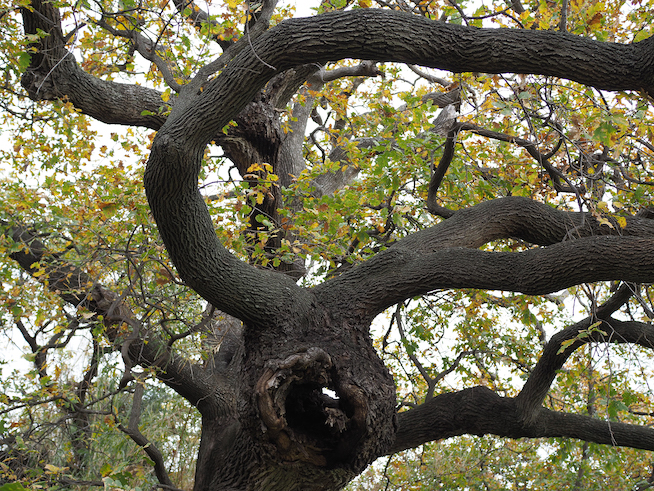
Sans Titre (Les Arbres) / Ohne Titel (Die Bäume), 2019/2024. Courtesy: die Künstlerin und Xippas, Paris; Genf; Punta del Este. Copyright: Bildrecht, Wien 2026.
-
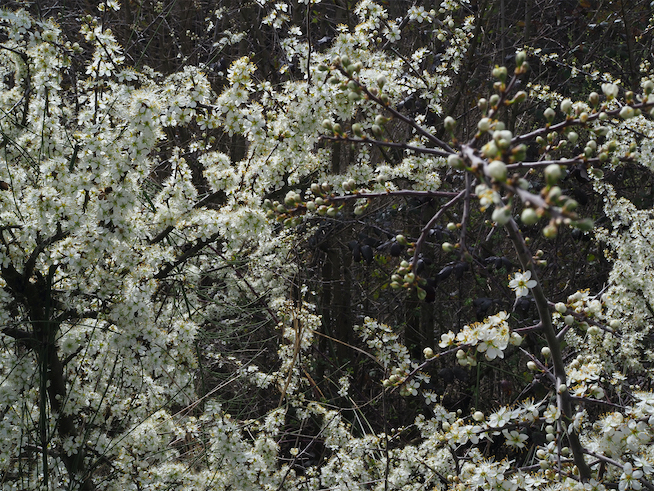
Sans Titre (Les Plantes) / Untitled (The Plants), 2019/2026. Courtesy: the artist and Xippas, Paris; Geneva; Punta del Este. Copyright: Bildrecht, Vienna, 2026.
-
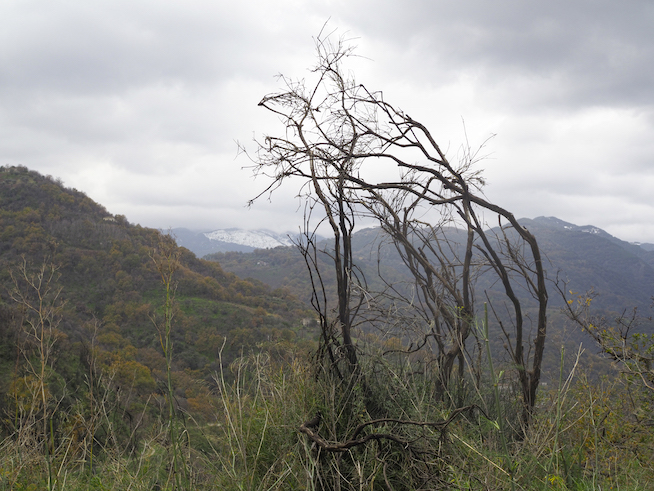
Sans Titre (Les Plantes) / Untitled (The Plants), 2023/2024. Courtesy: the artist and Xippas, Paris; Geneva; Punta del Este. Copyright: Bildrecht, Vienna, 2026.
-
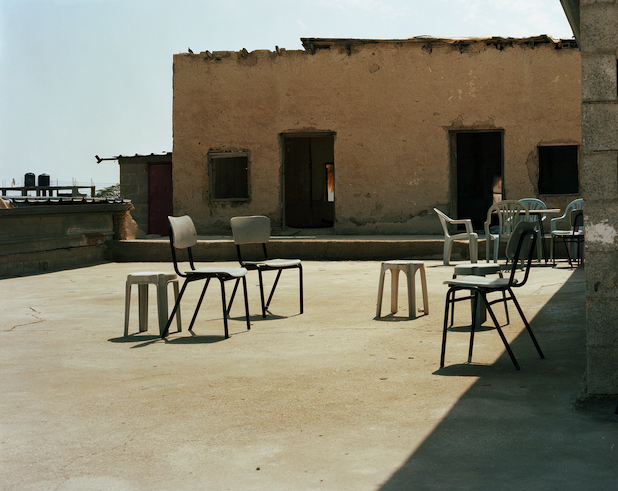
Sans Titre (Les Paysages) / Untitled (The Landscapes), 2011/2012. Courtesy: the artist and Xippas, Paris; Geneva; Punta del Este. Copyright: Bildrecht, Vienna, 2026.
-
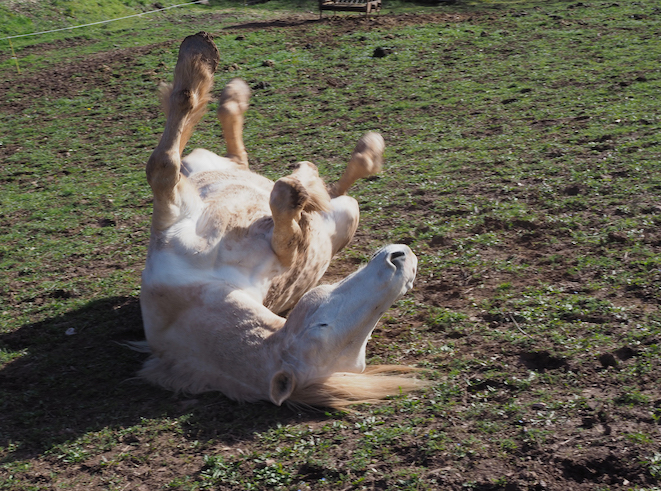
Sans Titre (Les Animaux) / Ohne Titel (Die Tiere), 2024/2026. Courtesy: die Künstlerin und Xippas, Paris; Genf; Punta del Este. Copyright: Bildrecht, Wien 2026.
-
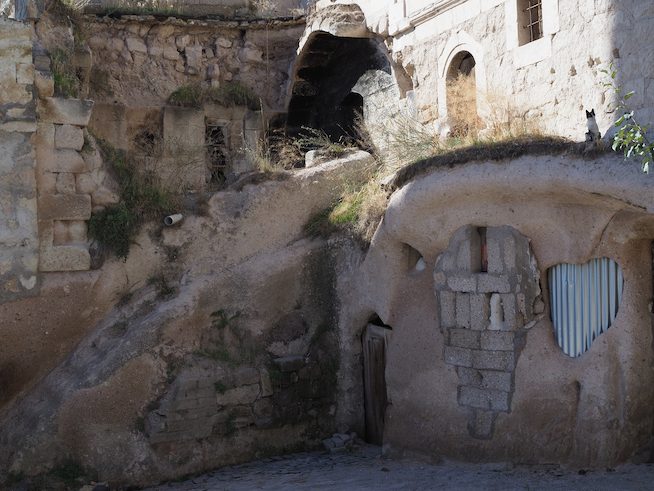
Sans Titre (Les Architectures) / Untitled (The Architectures), 2023/2024. Courtesy: the artist and Xippas, Paris; Geneva; Punta del Este. Copyright: Bildrecht, Vienna, 2026.
-

Sans Titre (Les Plantes) / Untitled (The Plants), 2025/2026. Courtesy: the artist and Xippas, Paris; Geneva; Punta del Este. Copyright: Bildrecht, Vienna, 2026.
-
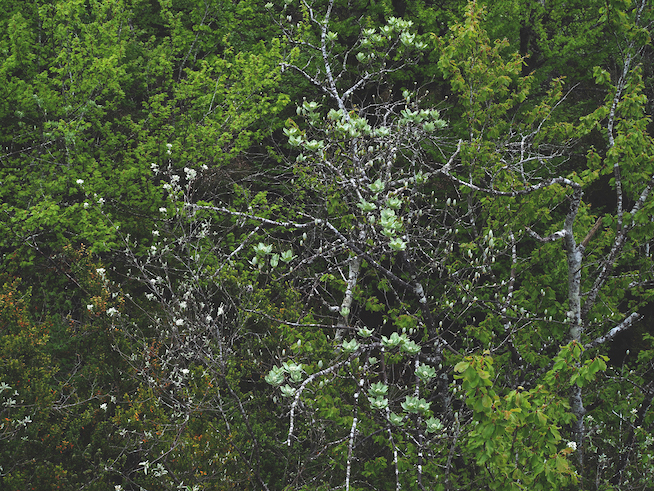
Sans Titre (Les Plantes) / Untitled (The Plants), 2019/2024. Courtesy: the artist and Xippas, Paris; Geneva; Punta del Este. Copyright: Bildrecht, Vienna, 2026.
-
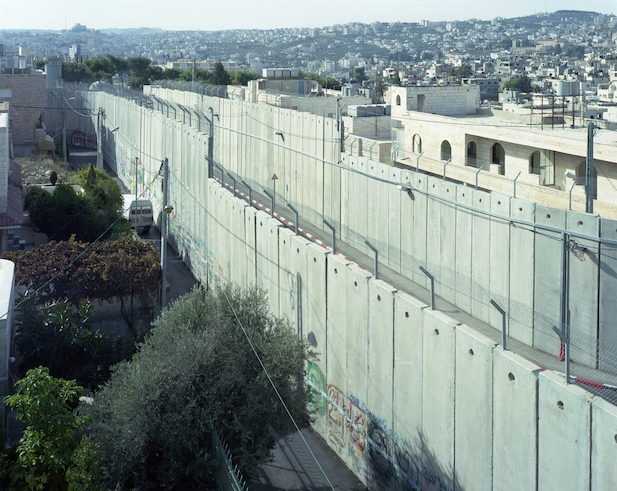
Sans Titre (Les Paysages) / Untitled (The Landscapes), 2012. Courtesy: the artist and Xippas, Paris; Geneva; Punta del Este. Copyright: Bildrecht, Vienna, 2026.
-
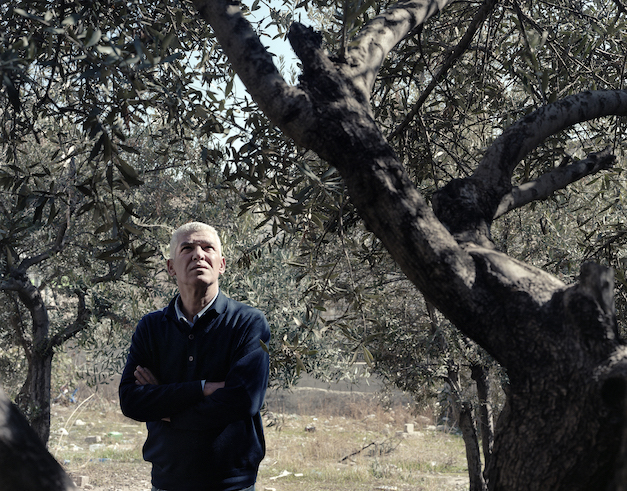
Sans Titre (Les Personnages avec Asad Abusway) / Ohne Titel (Die Charaktere mit Asad Abusway), 2013/2018. Courtesy: die Künstlerin und Xippas, Paris; Genf; Punta del Este. Copyright: Bildrecht, Wien 2026.
-
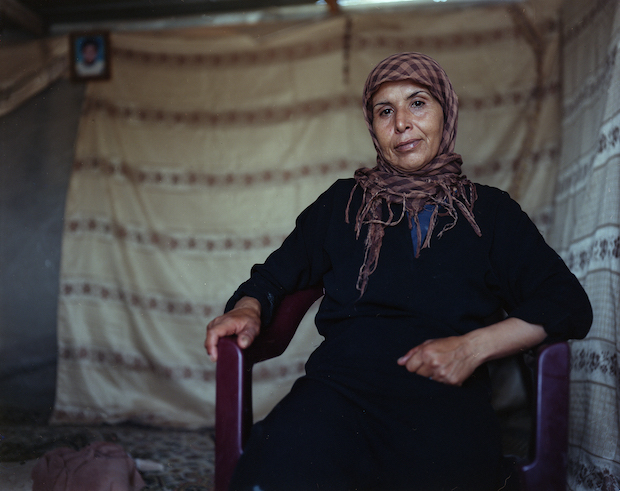
Sans Titre (Les Personnages avec Um’Slimane) / Untitled (The Characters with Um’Slimane), 2014/2026.
-
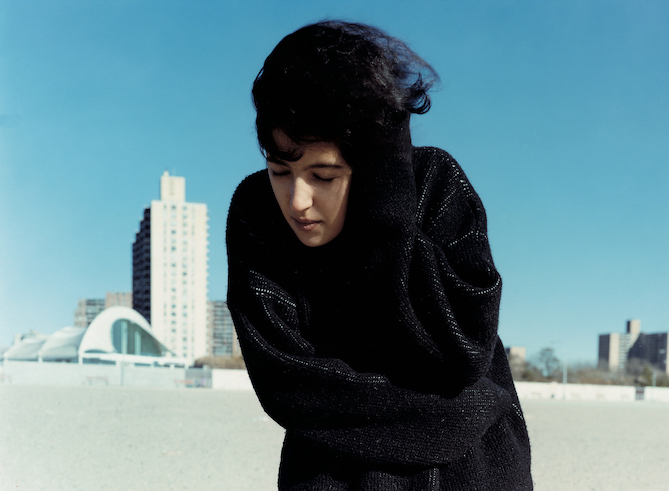
Sans Titre (Les Personnages avec Ilham Riffi) / Ohne Titel (Die Charaktere mit Ilham Riffi), 1999. Courtesy: die Künstlerin und Xippas, Paris; Genf; Punta del Este. Copyright: Bildrecht, Wien 2026.
-
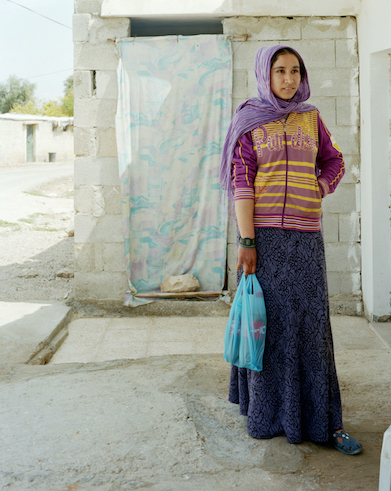
Sans Titre (Les Figures avec Samar) / Ohne Titel (Die Figuren mit Samar), 2012. Courtesy: die Künstlerin und Xippas, Paris; Genf; Punta del Este. Copyright: Bildrecht, Wien 2026.